
Princeton University


ProjectPrinceton UniversityLocationNew Jersey, USAManufacturersAllen & HeathArchitectLucien Dowdell InstallerHead of Production for University of Princeton Performing Arts, Lucien Dowdell.Submitted ByAllen & Heath

Lucien Dowdell was brought on as the department’s production manager in 2020, and was immediately tasked with overhauling the campus’ aging audio equipment. “I met with the various production teams – the crews actually working with the gear,” recalled Dowdell. “It became clear to me that, with such a diversity of performances, we needed some versatility.”

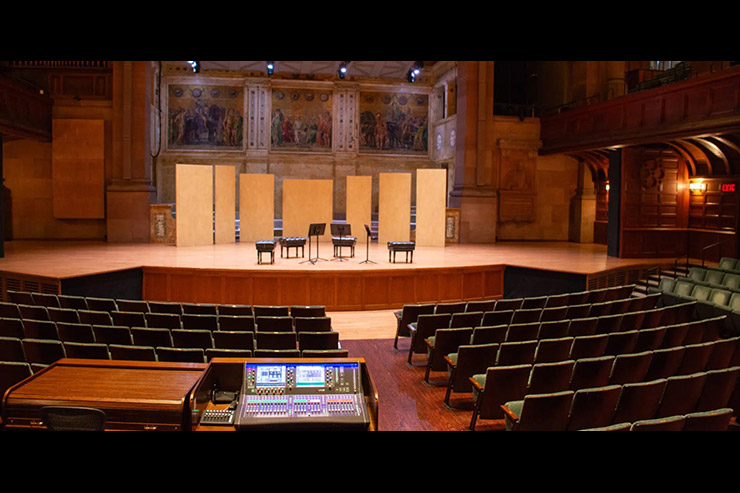
The university’s main concert hall is host to many classical and chamber music performances, which are unamplified. Other times, the venue features events with greater audio technical demand – such as discussion panels, film screenings, and fully amplified Jazz and Big Band concerts.

If Dowdell had opted for a one-size-fits-all console solution, it would have required a member of the technical staff to be present during all performances, since it requires operating a full-fledged mixing console to control simple wireless microphones. “In the old system, there wasn’t much flexibility,” Dowdell recalled. “I wanted to view things more holistically and use current network audio technology to make us adaptable for each performance.”

Dowdell had some familiarity with Allen & Heath products. “I had used the SQ series mixers before and really liked them,” he recalled. When seeking a solution for Princeton, Dowdell decided to research Allen & Heath’s current offerings. “I watched every video the company published over COVID, and had some discussions with our team – eventually, that’s where we landed.”

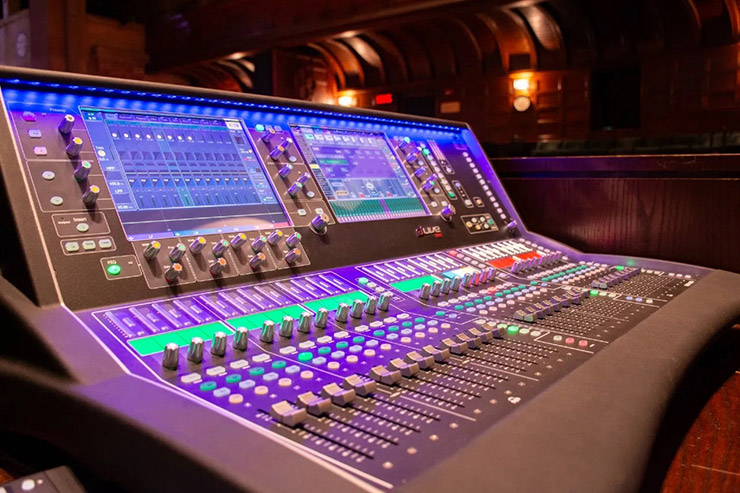
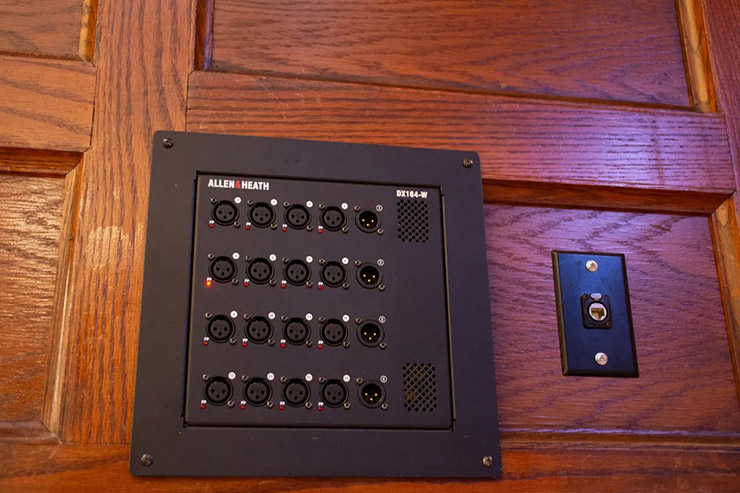
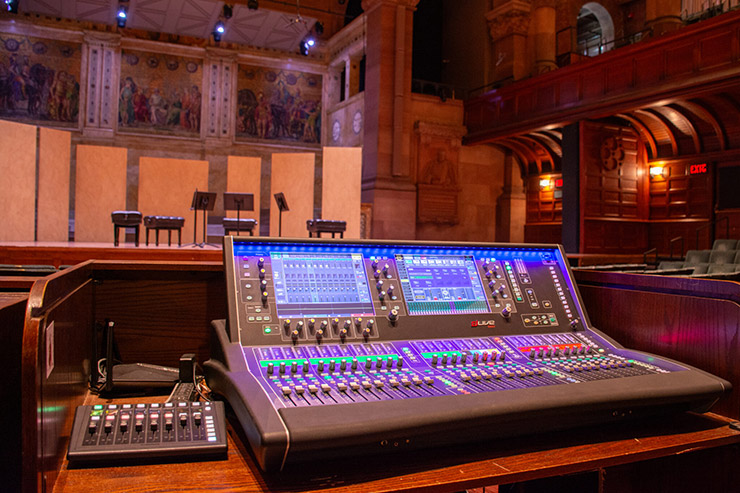
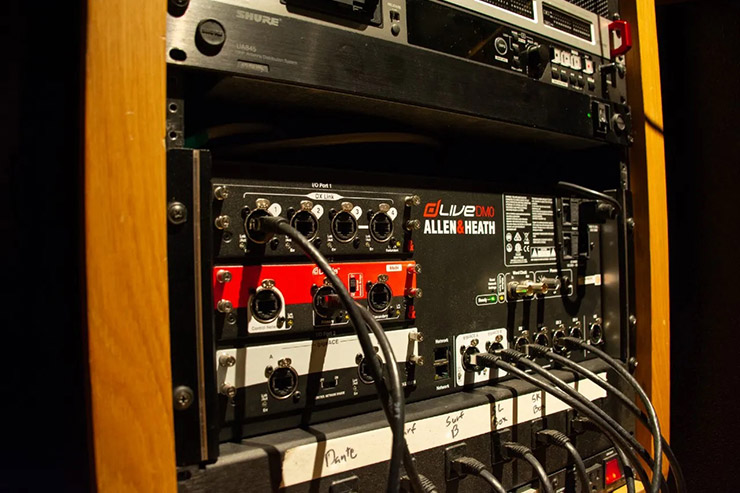
The final system for Princeton’s main concert hall now features a dLive S5000 control surface, with 28 faders and dual 12″ touchscreens; and a DM0 MixRack, which handles up to 128 channels of 96kHz audio processing and 64 fully configurable busses. Dowdell opted for dLive for its power, value, and intuitive workflow. “The dLive platform is just way more user friendly compared to other consoles out there,” he noted. “It also costs considerably less than other consoles at that level.” The dLive is fed by multiple DX stageboxes strategically positioned around the venue, and a gigaACE card in the console allows digital splitting to an SQ mixer that can be used for monitor mixing if needed.

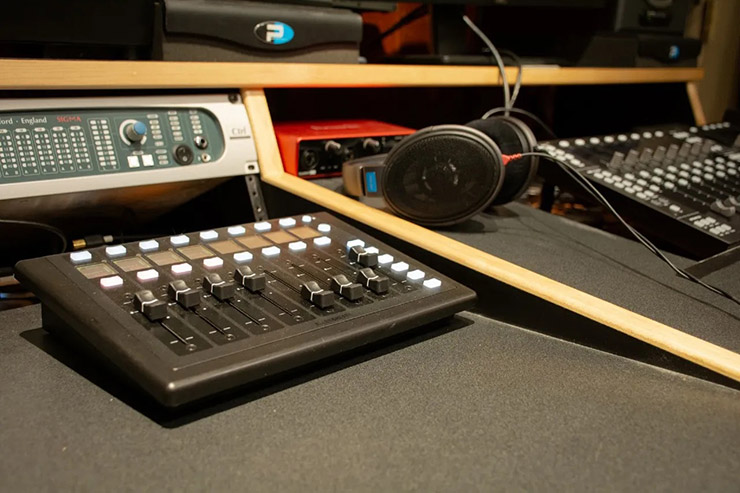
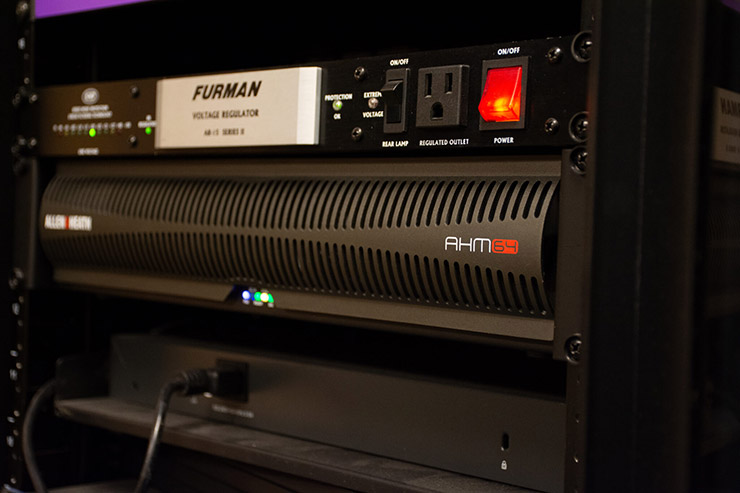
Using a Dante expansion card, the dLive console feeds its outputs to an Allen & Heath AHM-64 matrix processor, which is key to the system’s new flexibility. “The AHM is really the last mile, and touches the outputs of every audio source in the venue,” explained Dowdell. Depending on the type of performance, the production team can recall different presets on the AHM to have it take input from the dLive console (in the case of an amplified performance), or simply act as a standalone mixer for wireless handheld mics during conferences or classical performances when the conductor wants to address the audience.

Princeton University’s performance venues presented a deceptively complex challenge: a single audio infrastructure had to support everything from unamplified classical recitals to fully produced jazz concerts, spoken-word events, film screenings, and hybrid lectures. Rather than forcing these demands into a rigid system, the team—working closely with Lucien—delivered a solution that is both technically sophisticated and genuinely user-centric.

At the core of the project is a flexible architecture built around Allen & Heath’s ecosystem, combining matrix processing, networked audio, and intuitive control surfaces. What elevates this installation is not the specification, but how intelligently it has been applied. The system allows seamless transitions between complexity levels: a full-scale concert can utilise a high-end digital mixing workflow, while a simple lecture can be run via clearly labelled presets such as “HH Talk,” requiring little to no technical expertise.

This dual-mode operation is where the project distinguishes itself. Historically, venues of this calibre require trained engineers for even the simplest events. Here, non-technical users are empowered to operate the system confidently, reducing staffing requirements while increasing accessibility. At the same time, professional engineers retain full control when needed, with no compromise in capability.

The use of networked audio ensures the system is not only robust but future-proof. Signal distribution across performance spaces, lobby areas, streaming outputs, and assistive listening systems is handled within a unified framework, allowing for expansion and reconfiguration without disruption. This level of integration is executed with clarity and restraint—nothing feels over-engineered, yet nothing is missing.

Crucially, the project reflects an ongoing dialogue between design and real-world use. Feedback from staff and performers continues to inform refinements, ensuring the system evolves alongside the venue’s needs.

This installation succeeds because it prioritises usability without sacrificing performance. It is a rare example of an audio system that disappears when it should, and delivers exceptional results when it matters—precisely the kind of thinking that deserves recognition.