
Le Petit Cab


ProjectLe Petit CabLocationMarseille, ParisManufacturersPikiP Solar SpeakersInstallerPikiP Solar Speakers

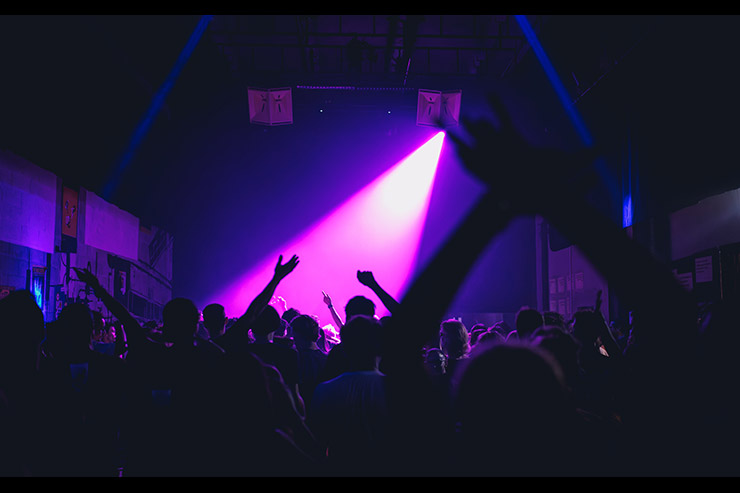
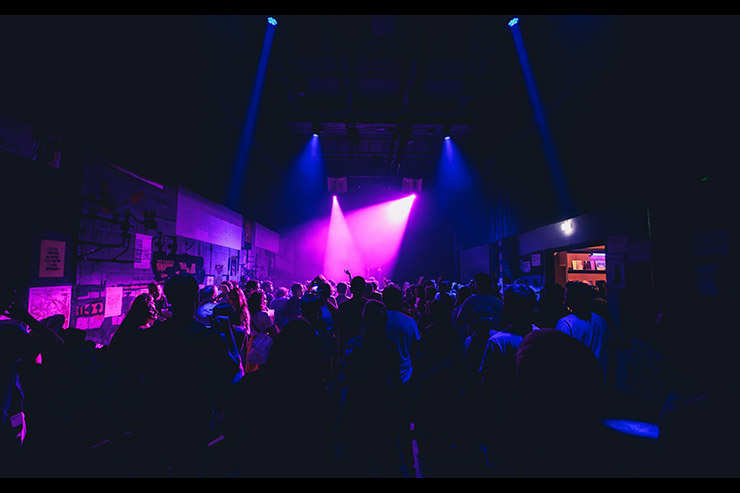
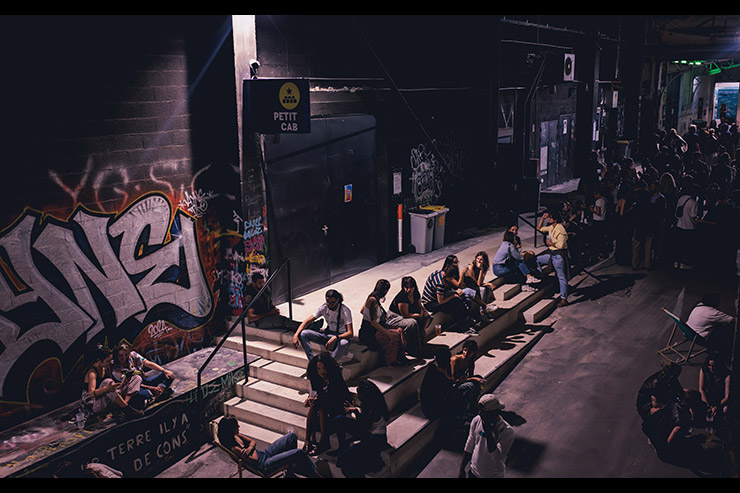
In September 2025, the large complex La Friche la Belle de Mai unveiled Le Petit Cab, a new 300-capacity performance space in Marseille, and, in doing so, set a European first. The venue is now believed to be the continent’s first current music space whose entire audiovisual setup runs on a fully autonomous, solar-powered system.

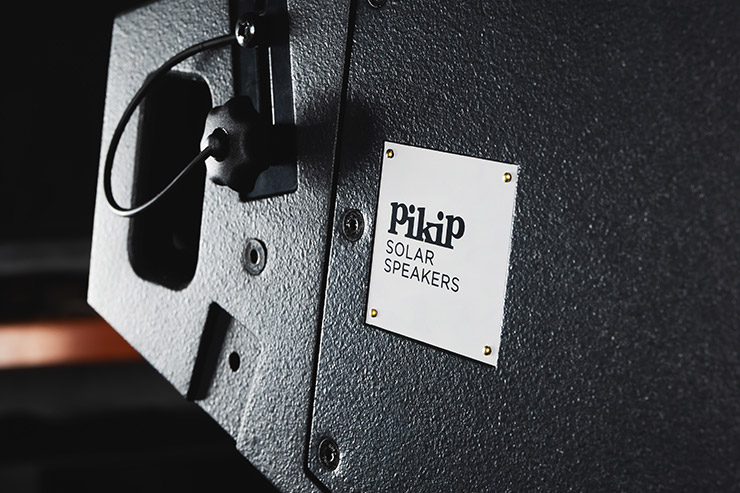
The project was delivered in partnership with Marseille-based manufacturer PikiP Solar Speakers, whose solar energy storage and audio technologies power the room’s sound, lighting, and control infrastructure. Le Petit Cab, led by the BISOU cooperation, was conceived as more than an additional stage. The brief was to create a space aligned with the owner’s ecological transition goals and capable of modelling new production standards for live music venues.

Julien Feuillet, Founder of PikiP Solar Speakers, explained: “La Friche is a major avant-garde cultural space that promotes a range of incredible artists. In le Petit Cab, they wanted to imagine an autonomous and responsible space, which is part of the reason they came to us, as these commitments are a big part of our ethos at PikiP.”

PikiP’s role in this project is also a result of the manufacturer’s previous work with Le Petit Cab. “We’ve supplied equipment for festivals and events inside the larger La Friche space before,” Feuillet continued.

“It’s a big venue, with many areas, and a big team, so it’s beneficial that we already had an understanding of this going into the installation. “Collaborating with La Friche has been a valuable opportunity to implement a permanent installation in the space and demonstrate the versatility of our systems.”

For about ten years, La Friche has been part of an ecological transition approach. It has already managed to reduce its energy consumption by 45% since 2018, thanks to a 1,500 m² photovoltaic power plant that produces 25% of the energy consumed on the site. Le Petit Cab’s investment in PikiP marks the next step in this environmentally conscious move.

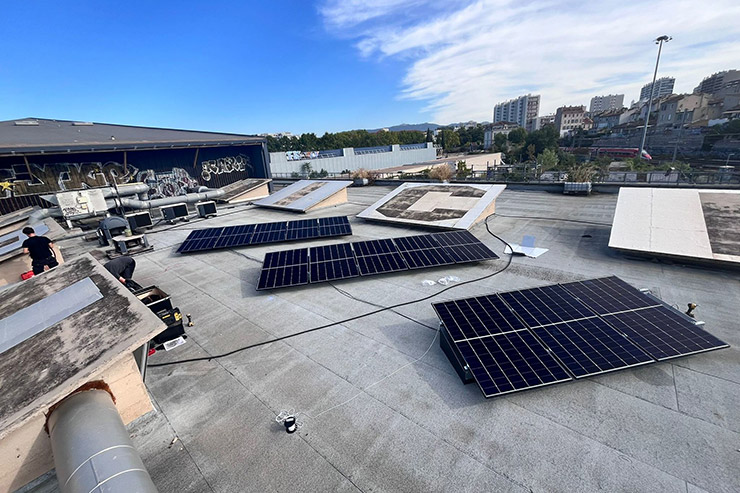
To guarantee the energy autonomy of the Petit Cab, fifteen solar panels have been installed on the roof by PikiP. They are themselves connected to three of the manufacturer’s SE10000 power stations, which each provide 10.2 kWh of autonomy and 10 kVA of power. Together, they supply the entire scenic infrastructure – PA system, stage lighting, and control room. The stations are modular and mobile, allowing different configurations both indoors and outdoors.

The sound diffusion system consists of six high-performance PikiPVCH30 speakers with constant curvature suspended in the room to ensure homogeneous coverage.
They have a conical-exponential pavilion with multiple inputs and offer constant directivity on a band of 85-18,000 Hz.

Alongside this are two PikiP VTL218 hybrid subwoofers with double resonators, placed on the floor in front of the stage. Then, on stage, six of the manufacturer’s VCX12 full-band coaxial speakers provide accurate feedback for artists.
The entire system is processed through preset-based multi-configuration processing, allowing different acoustic setups to be selected and optimised depending on the venue layout and programming requirements.

This solution operates sixteen channels of PikiP amplifiers, which use PikiP’s patented DC amp technology central to the installation. By working directly in direct current rather than repeatedly converting between AC and DC, the system avoids the energy losses typically associated with transformation stages, as Feuillet said that such losses can accumulate to around 5% at each step, and then snowball from there.

“You produce the energy, you store it, and you use it as efficiently as possible,” he added. Yann Loric, Technical Director at La Friche, stated proudly: “The scenic sound, light and video equipment has been completely disconnected from the main grid. It is now powered by energy stations connected to photovoltaic panels, with a target of 95% autonomy and solar-panel energy-only usage.”

Feuillet affirmed this, revealing: “Our technology is battery priority, with these batteries charged by our solar panels. The system integrates an automatic transfer switch that requests support from the grid only in emergency situations, such as prolonged bad weather or unusually high energy consumption leading to an abnormally low battery state of charge. In other words, if the battery level drops below 10%, the system automatically requests support from the grid to ensure uninterrupted operation, without programmers or technicians even noticing it.”

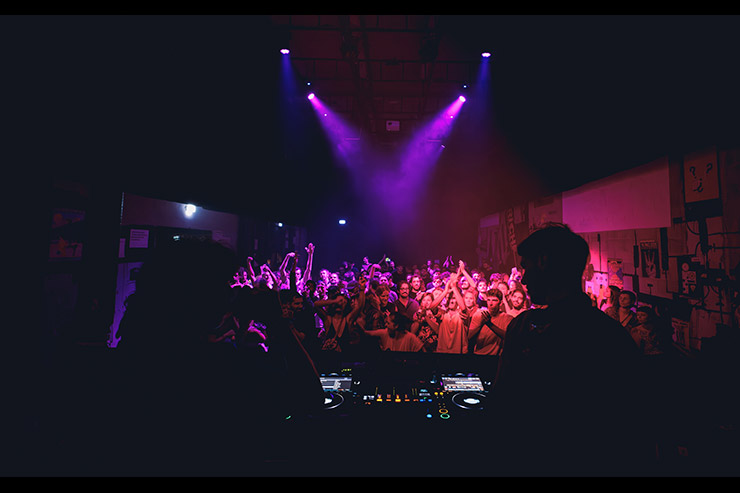
Le Petit Cab’s launch programme included a performance from US-based DJ Carl Craig, demonstrating the system’s ability to handle high-level electronic performance within the autonomous framework. To this, the PikiP founder said, “We were able to prove just how incredibly such sustainable, energy-conscious systems can work.”

According to La Friche’s Loric, the long-term aim is to make energy self-sufficiency the standard rather than exceptional. Feuillet shares a similar sentiment, as he concluded: “We want to encourage music venues around the world to explore new energy solutions and become independent from the energy grid. With proven reliability and professional-grade performance, our systems offer a viable and forward-thinking alternative.”