
Burj Khalifa Dubai Downtown


ProjectBurj Khalifa Dubai DowntownLocationDubai, UAELighting DesignerKvant Show ProductionSystems IntegratorKvant Show ProductionSubmitted ByKvant Show Production

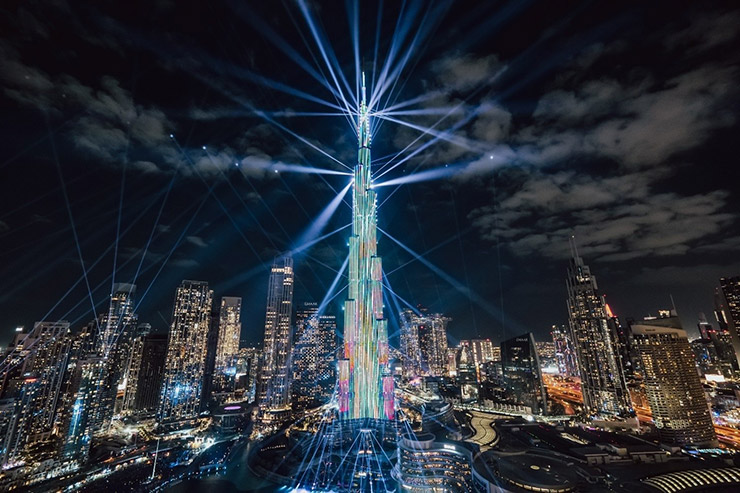
The client commissioned a permanent transformation of the Burj Khalifa from an occasional projection canvas into integrated vertical light architecture. The brief demanded a shift from temporary spectacle to sustainable urban infrastructure—creating a nightly artistic landmark intrinsic to Dubai’s identity. We were tasked with designing a programmable, weather-resistant light system operating at 828 meters.

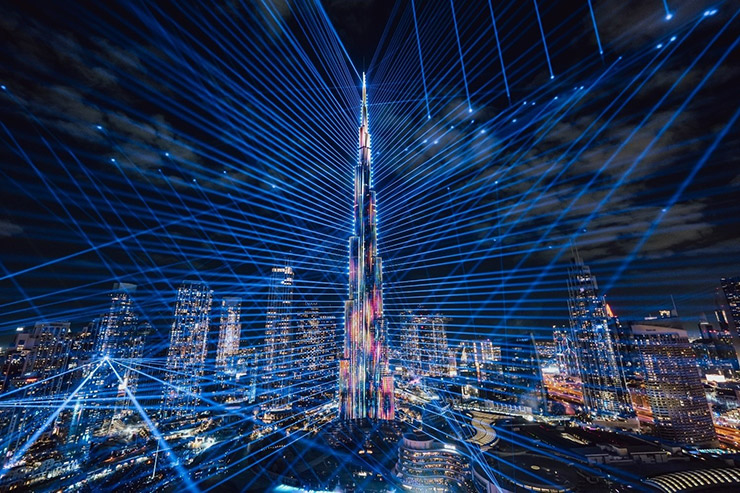
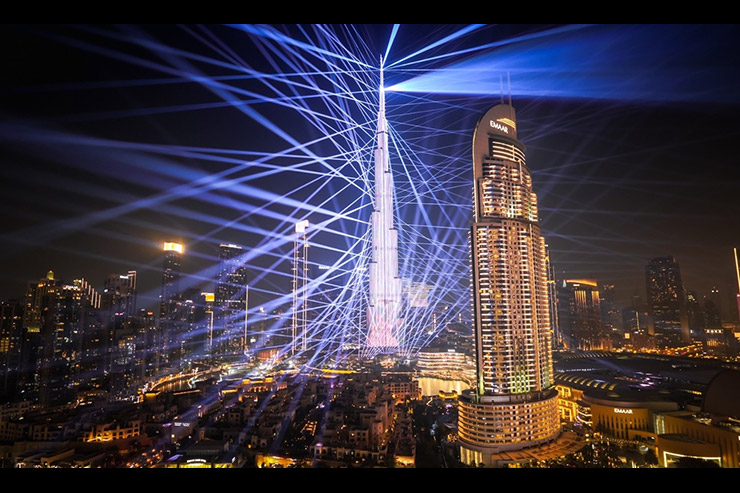
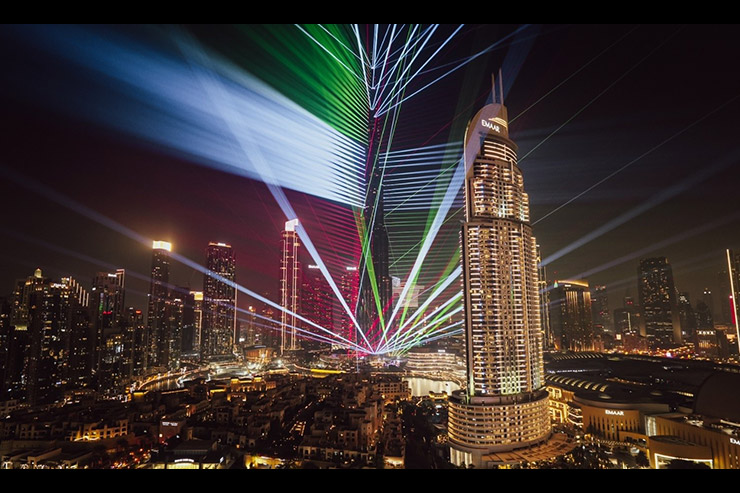
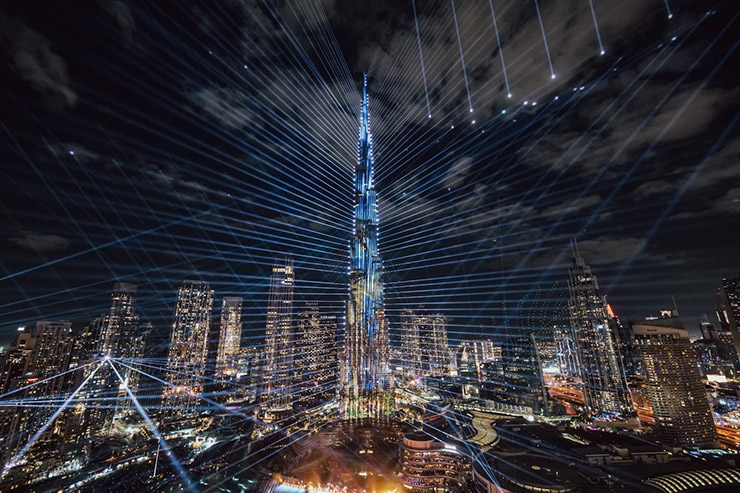
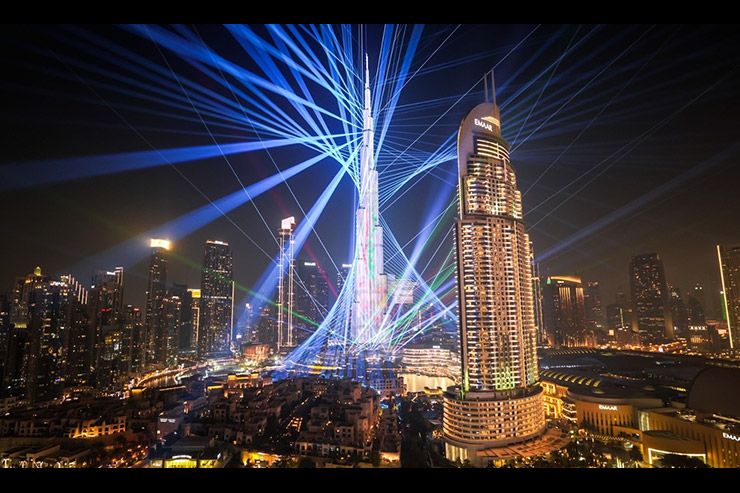
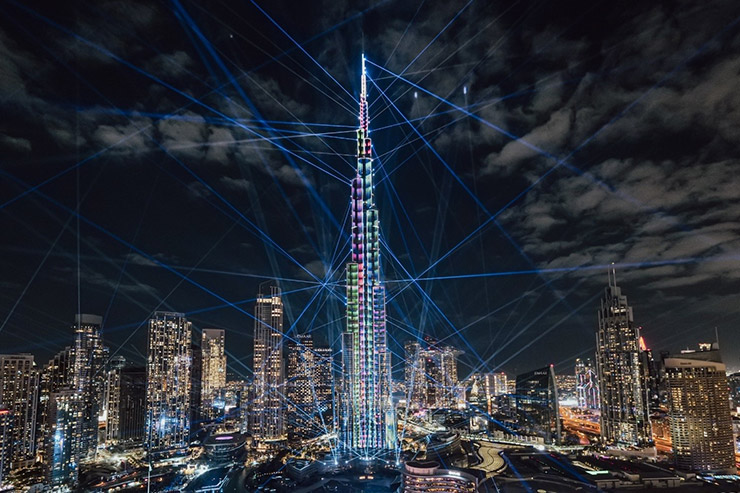
We responded by integrating 70 Kvant laser systems and 250 beam fixtures directly into the tower’s façade, synchronised with nine surrounding towers. The solution functions as permanent infrastructure rather than event technology, requiring seamless integration with the building’s structure and the wider Downtown Dubai skyline.

We equipped the Burj Khalifa with:

– 70x Kvant Monsoon Atom 70
– 250x Kvant 600 Prestige Beam

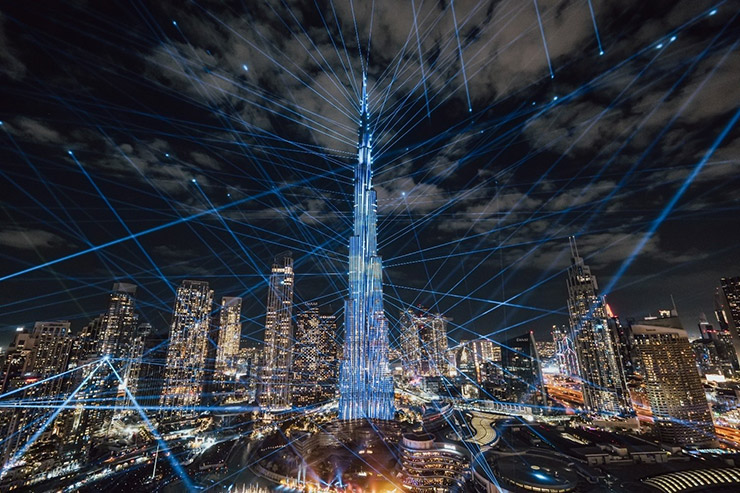
All permanently integrated into the facade, transforming the tower into a controllable vertical instrument for large-scale beam compositions.

We extended the composition beyond a single building. Nine surrounding towers joined the synchronized skyline architecture, each equipped with:

– 12x Kvant 600 Prestige Beam
– 2x Kvant Monsoon Atom 70

This created a coordinated, multi-building activation across Dubai.

Extreme environment engineering standard lighting equipment failed rapidly during initial testing at altitude. At 828 meters, fixtures faced 50°C heat, sand infiltration, and intense UV exposure. We deployed custom-adapted Kvant Monsoon and Prestige units with sealed optics and redundant cooling systems, turning environmental stress into a design parameter rather than a limitation.

Vertical installation logistics integrating 320 fixtures across the world’s tallest facade required specialized rope-access protocols and complex rigging for the upper tiers. We engineered modular mounting systems allowing for efficient installation and single-technician maintenance without disrupting building operations—a critical factor for the long-term viability of permanent infrastructure at extreme height.

Signal integrity across scale maintaining synchronisation across 828 meters of vertical complexity, plus nine neighbouring towers, demanded overcoming signal degradation in a dense urban RF environment. We implemented a robust fiber-optic backbone with redundant signal paths, ensuring millisecond-precise coordination across the entire district, regardless of electromagnetic interference.

Urban coordination complexity the phased installation across nine additional towers involved navigating multiple stakeholders, building management systems (BMS), and municipal coordination. We established unified control protocols and a centralized monitoring architecture, treating the Dubai skyline as a single programmable instrument rather than a collection of isolated installations.

Long-term sustainability and monitoring shifting from temporary event logic to permanent infrastructure required a complete rethink of component lifespan and maintenance. We developed proprietary real-time monitoring software that tracks every fixture’s internal performance (temperature, humidity, signal). This enables predictive maintenance, ensuring that the artistic precision and beam alignment remain consistent year after year, despite the brutal environmental conditions.

This project redefines the relationship between architecture, light, and urban identity. Unlike temporary projections or decorative façades, we transformed the world’s tallest building into a permanent light instrument—establishing a new category of infrastructural art that operates continuously as part of Dubai’s urban fabric.

The technical achievement is unprecedented: We integrated 320 custom-engineered fixtures (250 Kvant 600 Prestige Beams and 70 Monsoon Atom 70 lasers) directly into the Burj Khalifa’s facade at heights reaching 828 meters. By synchronising these with 126 additional units across nine neighbouring towers, we solved challenges no standard AV installation faces: extreme desert survival at altitude, vertical signal integrity, and urban-scale coordination across ten structures.

Our innovation extends beyond technology to a new conceptual framework. We shifted industry thinking from “events on buildings” to “buildings as art,” creating a programmable infrastructure that generates decades of cultural value. The work demonstrates how high-end AV integration can transform global landmarks into living cultural assets rather than temporary canvases.

The impact is both measurable and sustained: a 2 billion global reach during major activations and a nightly presence in the world’s most photographed skyline. More significantly, we’ve created a replicable model for urban light architecture—proving that technical infrastructure can become permanent public art.

This project represents the future of our industry: where AV integration, architectural lighting, and urban design converge to create enduring cultural infrastructure. It deserves recognition not merely for its monumental scale, but for establishing new possibilities in how technology serves cities and their global identities. By combining engineering discipline with artistic vision, the Burj Khalifa Vertical Light Sculpture stands as one of the most ambitious permanent installations ever realised.