
Holland Performing Arts Centre


ProjectHolland Performing Arts CentreLocationOmaha, Nebraska, USALighting DesignerTheatrical Media ServicesSubmitted ByTheatrical Media Services

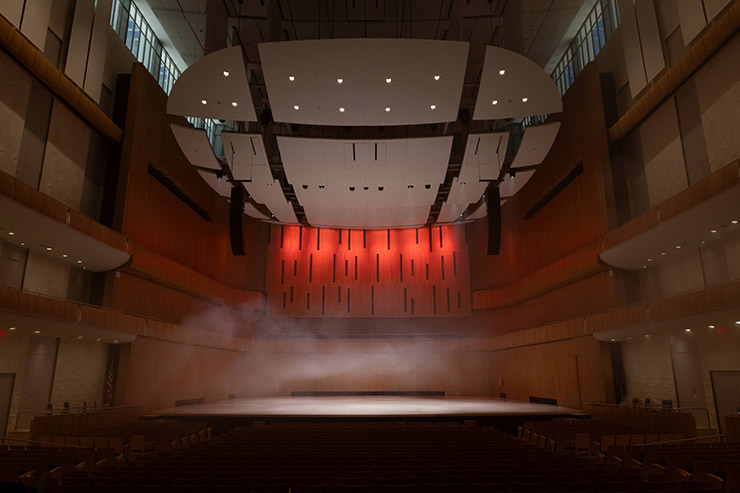
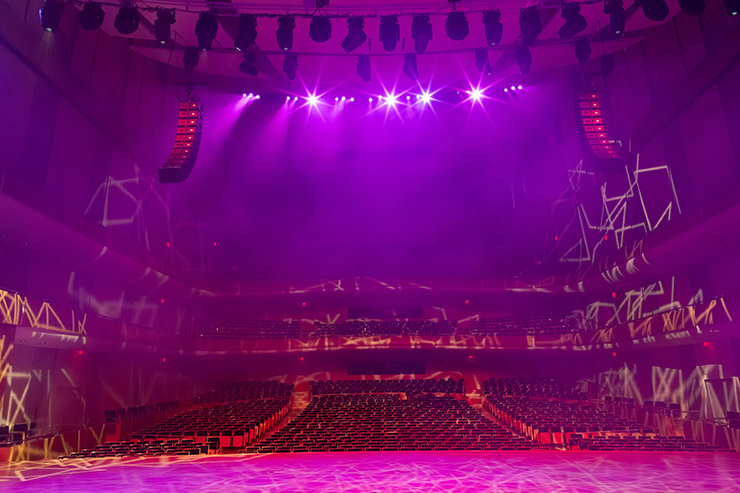
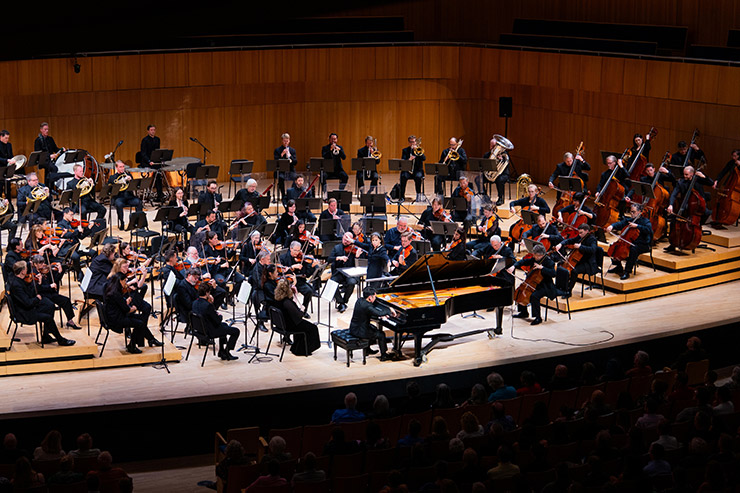
The 20th anniversary retrofit of the Peter Kiewit Concert Hall in the Holland Center – a shoebox style hall purpose-built for the Omaha Symphony.

The client requested an update to the lighting package to allow for better flexibility in their mandate of serving the Omaha Symphony, while also accommodating the many touring acts that frequent the building. The last update was for the 10th anniversary, and for the 20th we needed to balance the need for acoustical precision for the symphony along with the technological advancements of modern concert lighting.

The new system needed to be both bold in look, flexible in function, and able to disappear when needed.

The Main focus was on the acoustical needs of the Symphony. The system being replaced was primarily made of incandescent, static fixtures on winched battens. There were some Robe MMX Blades for use by touring acts and general use, but they were too loud for the space when the orchestra was acoustic. The stage riser system also limited the ability to adequately focus the overhead stage lighting on a regular basis.

It was determined early on that moving lights must be a feature of the new system and that all overhead fixtures must have the ability to pan and tilt due to this limitation. It was thus necessary to find fixtures that prioritised quiet operation.

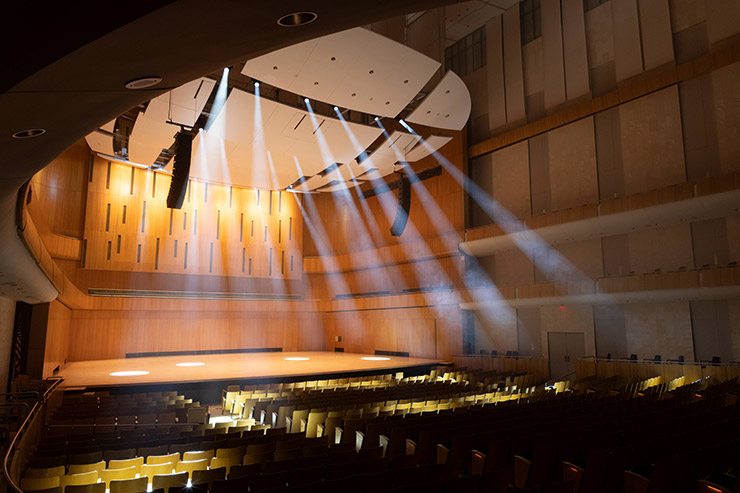
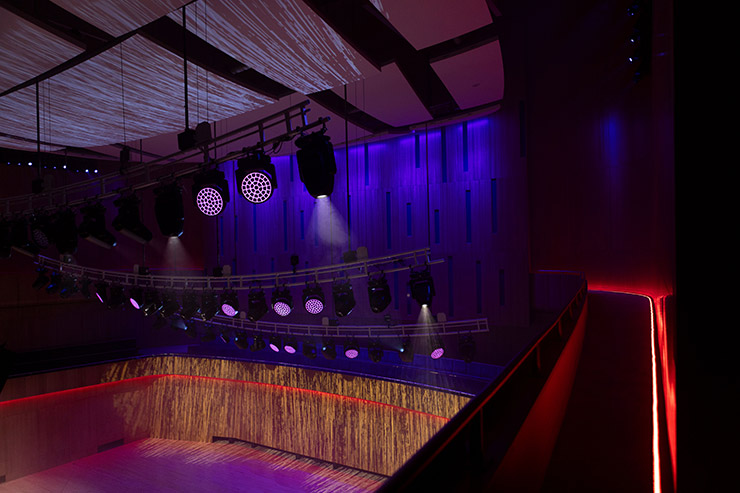
We held a shootout in the space between High End, Ayrton, and Elation, to determine our path forward and ended up using all three manufacturers to attack different aspects of our problems. High End’s Halcyon Silents were chosen as the backbone of the system for their fanless design and incredible color fidelity. Ayrton was chosen for the Zonda 9 FX due to the LiquidEffect face feature and the size of the bubblehead. This would allow us to create movement over the stage for symphony productions, without causing big changes on the members themselves, as well as providing us with a bold wash light that can fill the space with bold colors and be a featured part of touring designs.

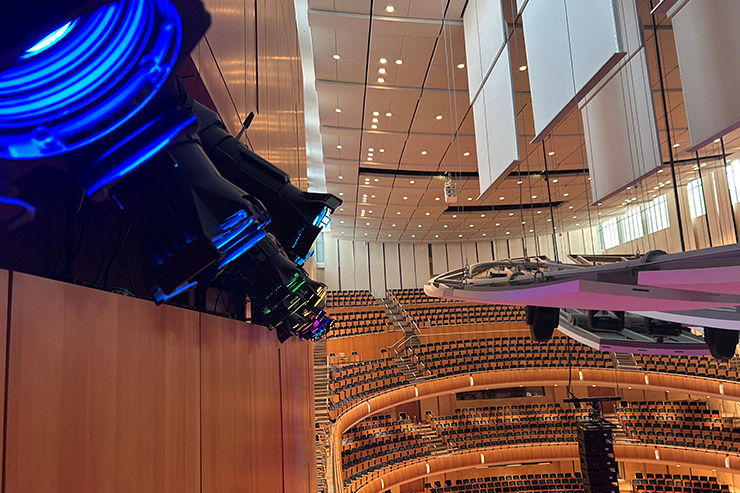
The last key to the puzzle was the Elation KL Core – these replaced the main front light and high side positions, originally outfitted with Source 4 Ellipsoidals. This allowed us to maintain the stock of leko barrels the Holland Center already owned, while introducing a more even wash on stage and exceptionally bold color and color fidelity.

This was all rounded out with Halcyon Platinums to compliment the silents in a rock and roll environment, Color Force 2+ for a back wall wash, and some Elation Proteus Rayzor Blades for some floor effect lighting as needed.

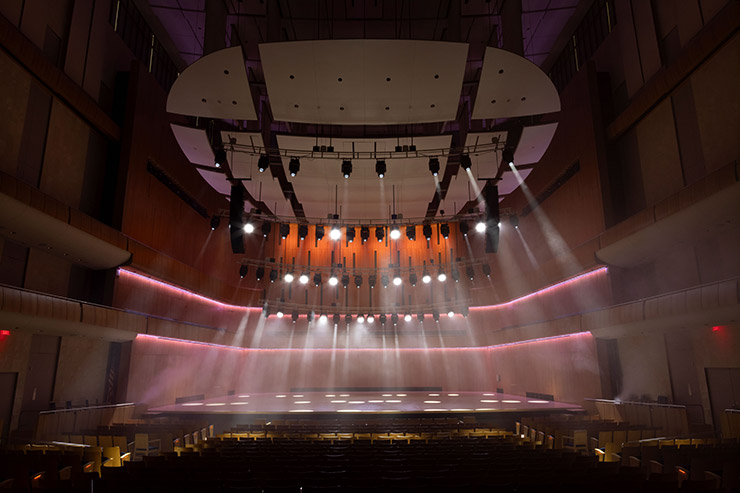
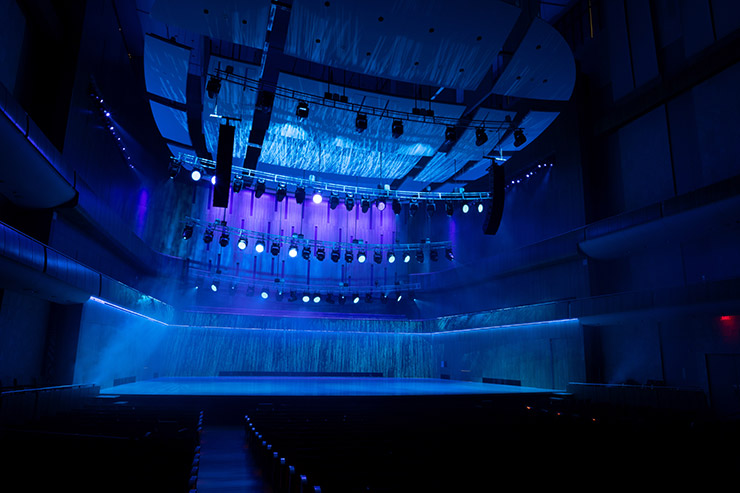
In conjunction with the Color Force 2+, we also designed a four color LED strip lighting system to create ambient lighting on all wall surfaces in the stagehouse section of the space. The Holland Center features some very large surfaces, all built with a maple finish. The space is incredibly bright, not just acoustically, but also visually.

It takes color incredibly well. We wanted to introduce a feature that allowed control of the ambient feel of the room, could allow for more subtle changes that would not affect the orchestra, and could work in conjunction with all the other aspects of the installation to make the stagehouse one cohesive space. We used Environmental Lights CoveWash RGB3000k to create a dynamic architectural piece that really compliments the stage lighting.

The main challenge was finding the right fixture to accomplish the goals of the symphony – being completely silent for their Masterworks performances as well as maintaining a high color fidelity that would work well with the other fixtures in the system, look good on video, and not strain the eyes of the symphony members.

This was primarily accomplished through the High End Halcyon Silents. The second main challenge was adapting to the architectural constraints of the space. All of the batten pipe is curved to match the curves of the acoustical shell hanging above the orchestra. The shell limits the overheads to five total positions.

The High Cove positions are extremely steep and frequently intersect with the cloud, the battens, and the main PA. The Front of House Cove is cut into the ceiling but contends with water and gas pipe as well as the main air return of the entire space, which is giant. With the CoveWash LED project, the product was going to need to be in a place that would be within full view of the audience. We needed to adapt and come up with a fascia to match the color and feel of the room overall so that it became a seamless part of the room.

We worked with High End to make sure that our fixture placement was going to cover the playing space effectively with the Silents and make sure that we would have enough output to appease the symphony members. We worked with a local finish carpenter to create an incredible fascia for the LED.

This was affixed to the space with special brackets that were designed and fabricated on 3d printers by one of our in-house designers. One particular batten does not have any data cable run to it. We used some product from RC4 to connect it wirelessly with the rest of the system. Finally, we worked hand-in-hand with the Symphony and with the building Operations Manager from start to finish and included them all in every decision along the way.

The Holland Center is an example of great collaboration and intent. While the space was purpose-built 20 years ago to house the Omaha Symphony, its mission has grown to include all manner of events. It had long outgrown the stale technology of an older era that stifled opportunity for flexibility due to its many important architectural features; features that are always in the way, and work against the goals of the lighting designer.

This project brought together the seemingly disparate interests of a venue touring house and the staunch traditionalism of a symphony orchestra. We developed systems within the unique constraints of the building to achieve the needs of the symphony, allowing them to be traditionalists when they need, while also injecting modern technology into the stagehouse.

This allows for the modern touring lighting designer to be able to confidently walk into the venue and know they can have a strong, dynamic show in a venue that doesn’t get truly dark while also allowing the musicians of the symphony to be able to read their music comfortably.

This should win because it transformed a venue that was primarily focused on being a symphony house, and turned the entire stagehouse into a lighting fixture.

The biggest challenge in designing in the space is that the blonde wood of the space is so dynamic and bright that if you aren’t impacting a portion of it, it can become a distraction, or it can make the room feel too bright, or parts of the space can become lost in the visual picture of the stage.

Through our design, the space was treated as its own entity that required just as much attention as the symphony itself.