
Ogres Kultūras Centrs


ProjectOgres Kultūras CentrsLocationOgre, LatviaManufacturersL-AcousticsInstallerVGD Projekt SIASubmitted ByVGD Projekt SIA

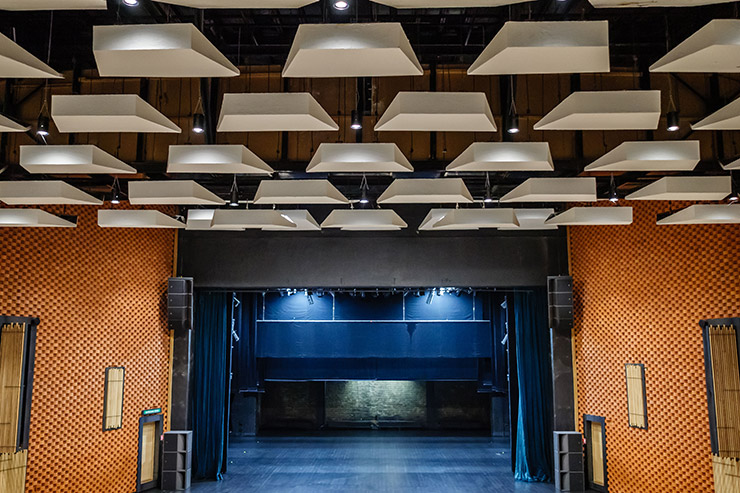
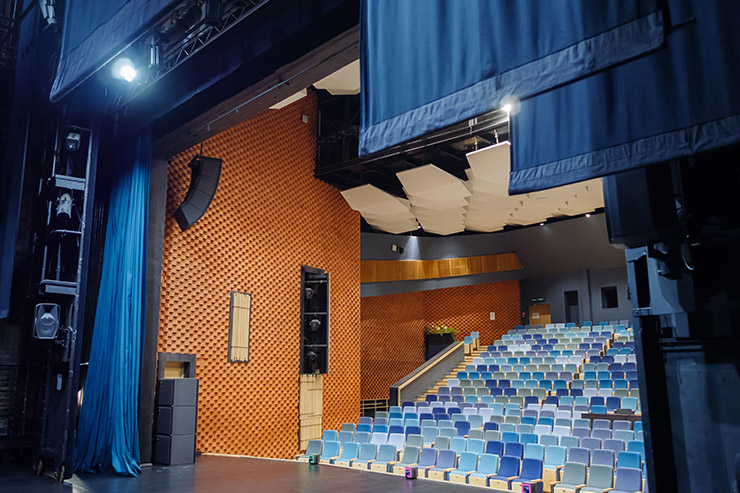
Situated 40km east of Riga, Ogres Kultūras Centrs is a versatile venue that acts as the cultural heart of the region. Built in 1988 to a striking design by Oļģerts Krauklis and Biruta Burčika, its 14,000 square metres host 17 resident amateur arts ensembles and over 200 events a year, spanning pop, jazz, rock and classical concerts, theatre, film screenings, conferences, folk festivals and everything in between. Its brick-lined walls absorb sound and keep reverberation in check, also give the space a warm and striking interior. The centre recently invested in a new L-Acoustics sound system.

For a venue programming everything from intimate chamber music to full-scale rock concerts, consistency and versatility were non-negotiable. With a new system in place, the priority was expert commissioning to ensure every component was precisely aligned, timed and tuned to work as a single cohesive solution across the full range of programme material. To lead that process, Ogres Kultūras Centrs engaged L-Acoustics Certified Provider VGD Project.

Operating from its showroom and demo facilities in Riga, VGD Project specialises in specification-driven solutions for cultural and entertainment venues, supporting projects from initial concept and system design through to technical supervision and performance validation.

For Ronalds Luknis, Application Engineer at VGD Project, the brief was clear. “Our goal was to achieve a system that delivers consistent, high-quality sound across the entire hall. It needed to be detailed and musical at low levels, yet powerful and controlled for live concerts. Proper calibration was the key to making the system work as one cohesive solution.”

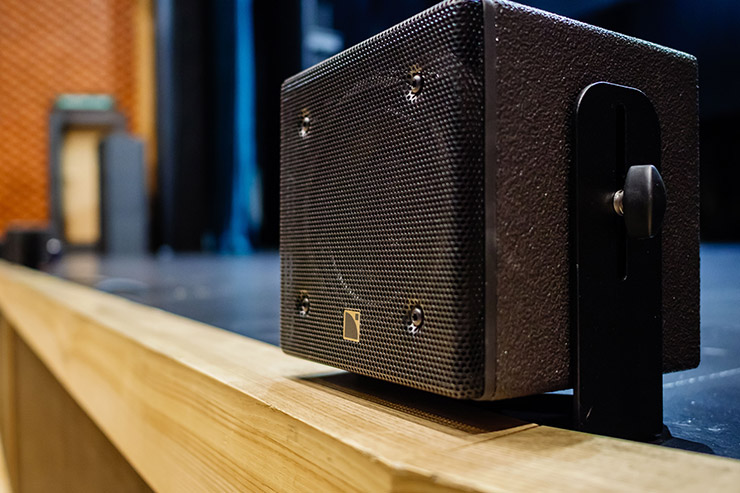
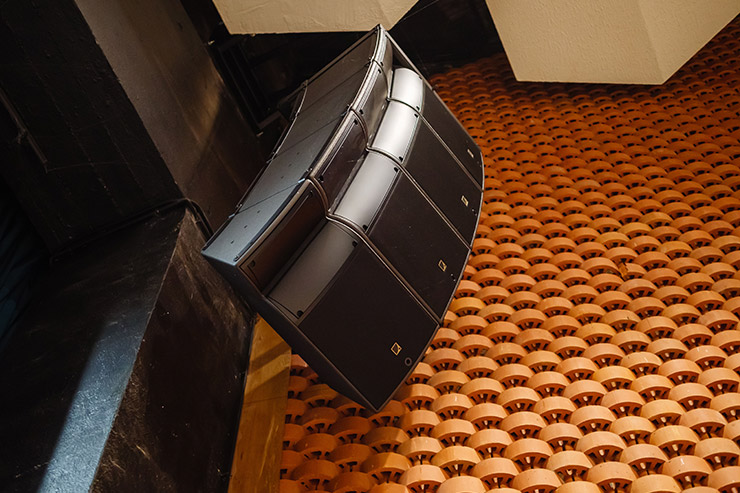
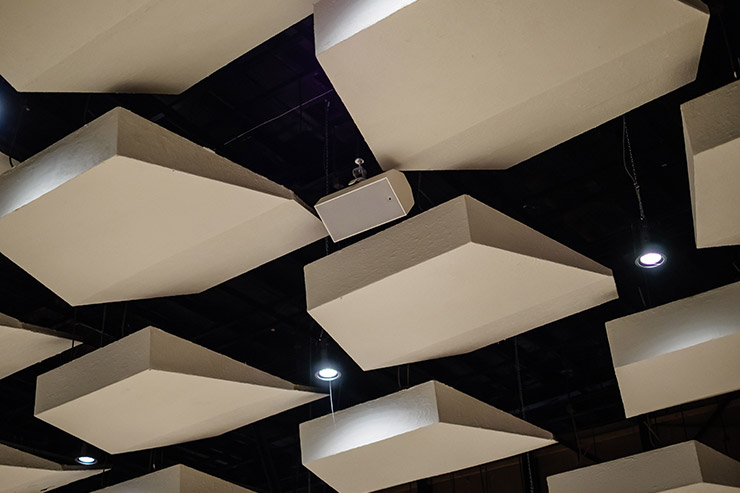
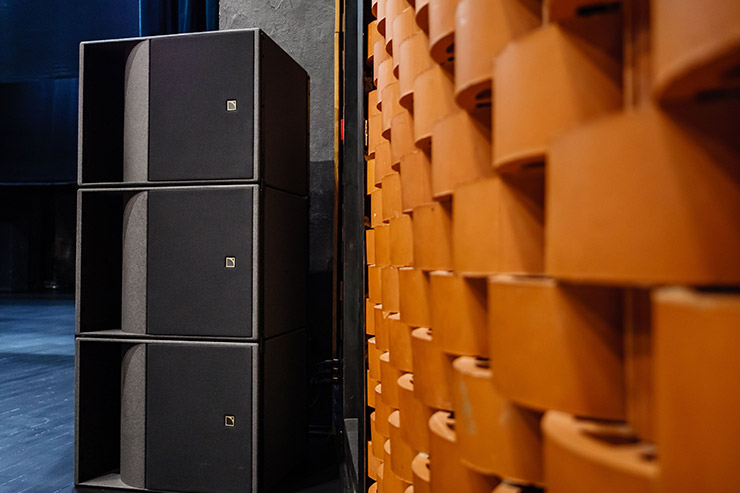
The installed system comprises six L-Acoustics A15i Focus and two A15i Wide paired with six KS21i subwoofers, a configuration well-suited to a venue of this scale. The A15i 15-inch driver provides sufficient output and control, and when combined with the KS21i, delivers the low-end power required for modern concert applications. Four X8i, installed discreetly in the ceiling serve as delay fills, while four 4Xi provided front-fill coverage for the first three rows.

Before any adjustments were made, the team conducted thorough baseline measurements across the hall to confirm the Soundvision model. Translating that potential into consistent, room-wide performance required the careful alignment and optimisation that only a structured calibration workflow can deliver.

The physical installation was carried out by Rock Distribution, a professional audio distributor serving the Baltic market, working in close coordination with VGD Project throughout. This division of responsibility, with VGD Project leading system design, modelling and calibration, and Rock Distribution handling deployment, helped to deliver a result that met the venue’s specific performance requirements.

L-Acoustics engineer Sergey Zhitnikov led the calibration process and established a clear baseline before making any adjustments.

Working from a pre-prepared Soundvision model, the team created a new LA Network Manager file and completed the majority of the fine-tuning there. “Most of the parameter optimisation was handled directly through filter work in Soundvision,” says Zhitnikov. “The next step involved detailed acoustic measurements using measurement microphones to refine the frequency response and time alignment. Delay settings were then adjusted to bring all system elements into phase.”

The final stage was extensive critical listening using reference tracks. This was an essential step, given that the ultimate measure of a well-calibrated system is listener perception.

The results of the calibration were immediate. With delays properly aligned, all system components — subwoofers, front fills, delay speakers and main arrays — operate as a single, coherent system. Post-calibration measurements confirm a smooth and consistent frequency response across the full audible spectrum, with audience members receiving detailed, intelligible sound regardless of their seating position.

“Once phase alignment and low-frequency control were addressed, the system started working as a single instrument,” says Zhitnikov. “The clarity and low-end balance improved dramatically across the entire hall.”

A New Regional Reference Point

While further upgrades are already planned, the system at Ogres Kultūras Centrs already stands as a strong reference point for professional sound system installation in the region.

For Ronalds Luknis, the project demonstrates what a properly executed calibration can achieve. “The system is powerful and provides great coverage anywhere in the hall,” he concludes. “It can be detailed at low volumes, but it can also be turned up loud without listener fatigue, which is ultimately what any venue should be able to offer.”

“Calibration is not an optional step, it defines the final quality of the system,” adds Zhitnikov. “When done right, the result is stable, repeatable and reliable for every event.”