
Papal Basilica of Santa Maria Maggiore


ProjectPapal Basilica of Santa Maria MaggioreLocationRome, ItalyManufacturersK-arrayInstallerDelta Tecno StudioSubmitted By3WM Communications for K-array on behalf of Delta Tecno Studio

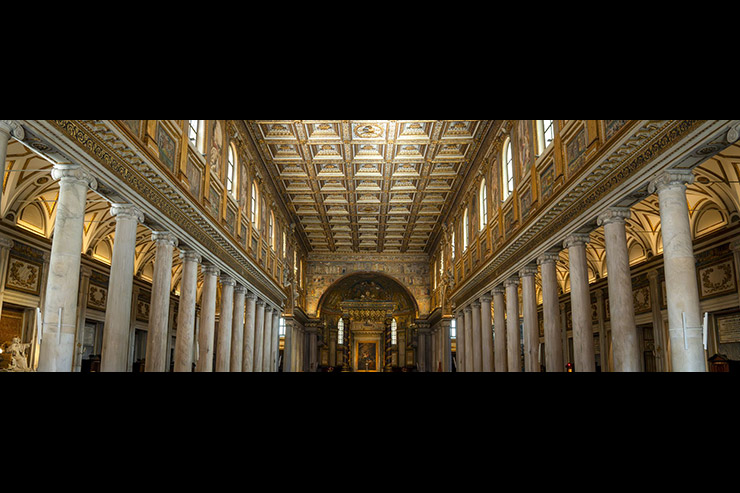
The Papal Basilica of Santa Maria Maggiore in Rome, a UNESCO World Heritage Site and major pilgrimage destination, required an expansion of its existing audio infrastructure to deliver clear and intelligible speech across multiple chapels while preserving the integrity of the historic building.

Delta Tecno Studio extended the system using K-array column loudspeaker solutions, including Kobra, Vyper and Lyzard models, fully integrated into a Q-SYS network.

The result is a unified, user-friendly audio system delivering consistent coverage across the basilica and its chapels, ensuring speech clarity for daily services and globally broadcast events within a highly reverberant and protected environment.

Delta Tecno Studio was tasked with expanding the existing audio system at the Papal Basilica of Santa Maria Maggiore to incorporate four side chapels into a single, unified audio infrastructure.

Building on their original 2018 installation, the integrator maintained a consistent design philosophy centred on speech intelligibility, system simplicity and minimal visual impact within the historic environment.

The expansion was designed around a fully networked audio architecture using Q-SYS for DSP, control and routing, allowing the chapels to operate independently or as part of the central system depending on the service or event requirements.

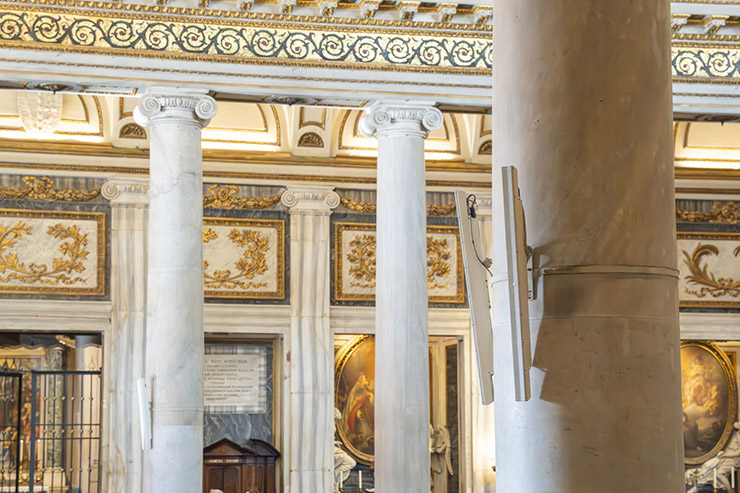
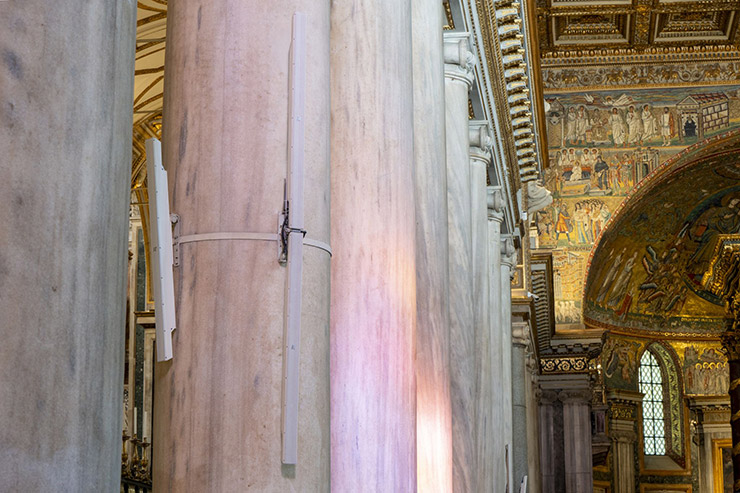
To achieve consistent audio performance across all spaces, the system integrates a combination of K-array Kobra column loudspeakers, Vyper units and ultra-compact Lyzard loudspeakers, selected for their controlled directivity and minimal visual footprint.

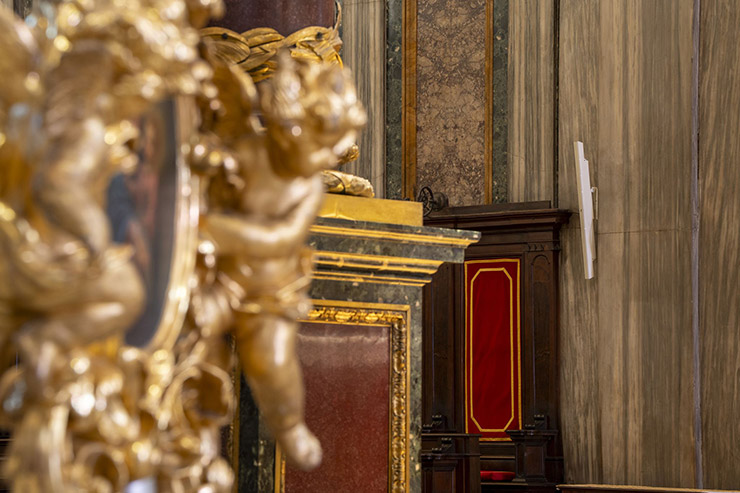
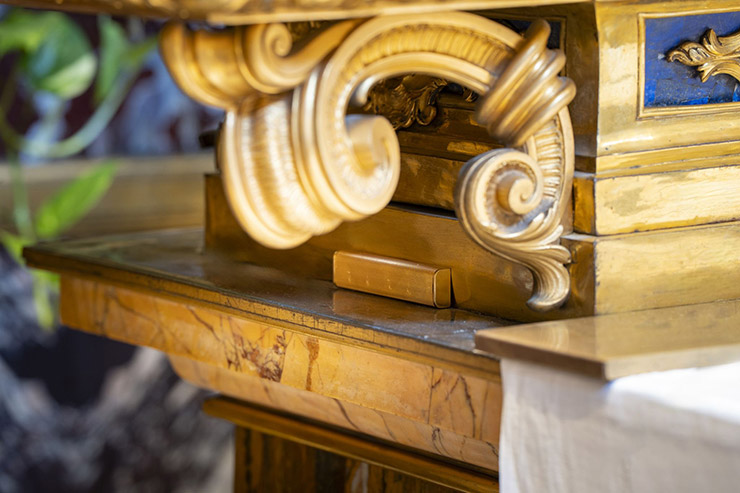
Pairs of Kobra loudspeakers were deployed in multiple chapels, with additional Vyper units used to extend coverage in more complex architectural areas. In visually sensitive locations, compact Lyzard loudspeakers were installed to provide discreet reinforcement without impacting the aesthetics of the space.

Extensive acoustic modelling using EASE software was carried out prior to installation, supported by on-site measurements and real-time analysis. This enabled the integrator to precisely predict coverage and optimize system performance in the basilica’s highly reverberant environment.

Delay, equalization and preset configurations were programmed for multiple usage scenarios, allowing clergy to operate the system via simple touchscreen controls or wireless devices without requiring technical expertise.

All infrastructure was designed with future expansion and redundancy in mind, including fibre-based signal distribution, Dante integration and a fully redundant DSP architecture to ensure uninterrupted operation during services and major events.

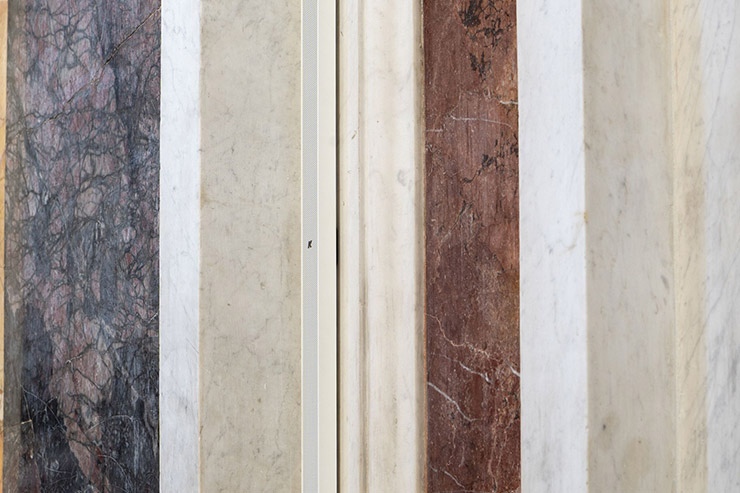
The physical installation was carefully executed using non-invasive mounting methods, reusing existing fixing points where possible and routing cabling along architectural lines to preserve the integrity of the historic structure.

The primary challenge was achieving high speech intelligibility within one of the most acoustically demanding environments in the world.

The basilica’s vast scale, reflective surfaces and long reverberation times make it extremely difficult to maintain clarity without careful control of sound dispersion and energy.

A further challenge was ensuring consistency between the newly integrated chapels and the existing system. The expansion needed to deliver identical audio quality and user experience across all zones while functioning as a single unified system.

The project also required strict adherence to heritage preservation regulations. All equipment and cabling had to be installed without altering or damaging the historic fabric of the building, necessitating non-invasive mounting solutions and carefully planned cable routing.

Operational simplicity was another key requirement. The system needed to be intuitive enough for clergy to use during services, while still offering advanced control and flexibility for technicians during large-scale events and broadcasts.

Finally, reliability was critical. As a venue hosting daily services and internationally broadcast ceremonies, the system required robust redundancy and fail-safe operation at all times.

This project represents a benchmark for audio system design in heritage and worship environments.

From a technical perspective, it demonstrates how carefully engineered loudspeaker directivity and system design can overcome extreme acoustic challenges to deliver clear, intelligible speech across both large and intimate spaces.

The integration of K-array’s compact column and micro loudspeaker technologies enables high-performance audio while maintaining complete visual discretion within a UNESCO-protected site.

The project also stands out for its system unification. Rather than treating each space independently, the integrator created a single, flexible audio infrastructure capable of adapting to a wide range of services, from small chapel gatherings to major globally broadcast events.

Beyond technology, the installation delivers meaningful impact: ensuring that every word spoken during worship is clearly understood by all attendees.

By combining acoustic precision, heritage sensitivity and operational simplicity, Santa Maria Maggiore sets a new standard for AV integration in historic houses of worship.