


Palais


ProjectPalaisLocationLondon, UKManufacturersFunktion-OneInstallerSound Services LtdSubmitted ByFunktion-One

Palais is a 500-capacity club in London developed through an extensive consultation and design process with Sound Services Ltd., built around a clear ambition to deliver a world-class sonic experience. The client brief evolved from the original specification into a more ambitious objective: to create a venue capable of competing with leading reference clubs globally, inspired by the spirit of culturally significant spaces such as Plastic People.

Three core requirements shaped the project: exceptional sound quality, integrated acoustic design and long-term cultural relevance. The client’s willingness to scale budget and scope in pursuit of performance was central to the outcome.

The sound system at Palais was designed by Sound Services Ltd. as a zoned layout that operates as a single, coherent system. Rather than treating each area as a separate problem, the approach was to maintain a consistent tonal balance and level of coverage throughout the space.

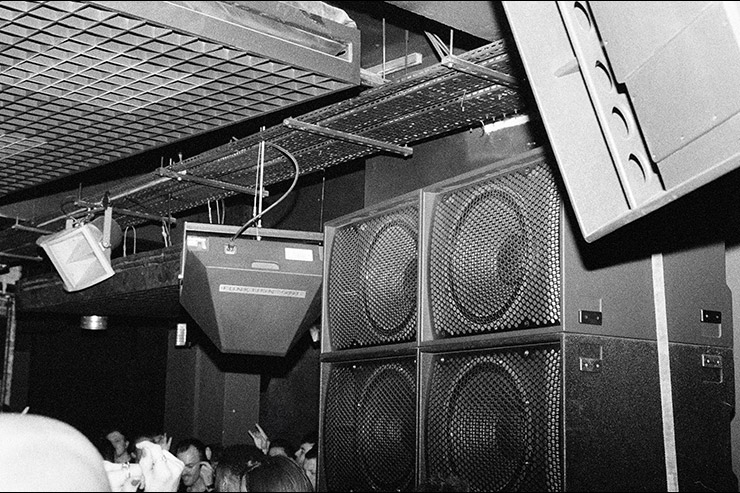
The main dancefloor sits at the centre of the design, built around Funktion-One Evo 6EH and Evo 7TL loudspeakers, supported by an F132 horn-loaded subwoofer and a block of 10 BR118.2 bass enclosures. This combination provides controlled coverage and a clear, dynamic midrange, underpinned by low frequencies with real weight and physical impact. Evolution XSH units handle front fill at the edge of the dancefloor, while Evo 2SH delays extend coverage deeper into the room.

A secondary area to the side is served by an Evolution X system with BR121 subs and F1201.2 fills. This part of the system was adjusted following testing to better match how the space is actually used. VIP areas have F1201.2 loudspeakers, keeping them aligned with the main room without pushing levels beyond what’s appropriate for those positions. DJ monitoring is provided by a PSM318 High with a BR218 subwoofer, giving a direct, high-impact reference while staying in step with what’s happening on the dancefloor.

System control is handled via a VMX88 matrix with VR2 remotes, with processing from two ID48X units and amplification across FFA 8004 HD G3 DSP, FFA 2004 HD and FFA 10K. The first-floor ballroom is equipped with a four-point F1201.2 system, supported by BR218, SB8 and F101.2 units, with F81.2 monitors and a BR115 sub for the DJ.

The installation at Palais was technically demanding and highly iterative, shaped by the complexity of the system design and a series of external constraints that evolved throughout the project.

Rigging presented the primary mechanical challenge. The combination of trapezoidal enclosures in non-standard orientations meant conventional mounting hardware was not viable, requiring bespoke solutions including fixing directly through the cabinets and carefully managing the interaction between different enclosure angles. Laser alignment was used throughout to ensure precision across the system. This complexity was compounded by licensing requirements introduced during the project.

Acoustic decoupling from the building structure became mandatory, leading to the integration of specialist spring isolation into the rigging design – affecting both height and alignment within an already constrained installation. Close coordination between design, engineering and installation teams was essential to reconcile these demands without compromising the system’s intended performance.

The introduction of F132 subwoofers required a broader rethink of the specification, with supporting components upgraded across the system to ensure everything functioned as a coherent whole. Acoustically, the extensive treatment applied throughout the room created both opportunity and constraint.

While it enables exceptional clarity and control, the high level of absorption required careful tuning to ensure the system delivered sufficient energy and impact, particularly in the upper frequencies. Real-world testing during soft opening revealed further refinements. Certain zones were reconfigured with higher-output components, effectively redefining them as extensions of the main dancefloor rather than secondary areas.

Additional low-frequency reinforcement was introduced after initial listening sessions to increase physical impact within the treated environment. Zoning and fill strategies were also revised in response to how people actually moved through and used the space.

Throughout the process, the full audio signal chain was considered carefully, with unnecessary processing avoided to preserve system integrity and maintain an honest, dynamic sound.

The result of this iterative approach – problem-solving on site, precise mechanical execution and a willingness to adapt – is a system that has been refined in direct response to the room.

Palais demonstrates what becomes possible when sound system design, acoustic treatment and client ambition are fully aligned. As it progressed the project evolved into something considerably more ambitious than the original concept — a venue that has raised the bar for what a 500-capacity London club can sound like. The technical achievement is considerable.

A high-specification Funktion-One system, extensive acoustic treatment integrated into the architecture, and a demanding installation process involving bespoke rigging, structural decoupling and iterative real-world refinement have combined to produce a listening environment that performs well beyond typical expectations for a venue of this size.

Even at high sound pressure levels, the system remains controlled, clear and intelligible — a result of the room and system working together rather than against each other. The low-frequency performance is a particular strength. The interaction between the F132 subwoofers and the broader bass system, within a carefully treated room, creates a physical and almost tactile experience.

Bass feels integrated and enveloping rather than overwhelming, with a precision and coherence that reflects the level of tuning applied throughout the project. The acoustic treatment is central to this outcome.

Rather than relying on output alone, the system operates efficiently and musically, delivering detail, immediacy and dynamic range that would not be achievable in an untreated space.

The treatment does not simply reduce unwanted energy – it fundamentally changes how the system performs and how the room feels. Palaiswas also inspired by a clear cultural ambition: to capture the spirit of venues like Plastic People, where the dedication to sound shaped everything about the experience.

That spirit is present in the finished result – a room where the system, the acoustics and the environment combine to create something greater than the sum of their parts.

For a 500-capacity venue to compete with internationally recognised reference clubs is a significant achievement. Palais sets a new benchmark for small-to-mid-scale club sound and makes a compelling case for what the format can deliver when quality is the genuine priority.