
Oculus – George Bush Intercontinental Airport


ProjectOculus LED Installation – George Bush Intercontinental AirportLocationHouston, Texas, United StatesInstallerFord AVSubmitted ByAV Stumpfl

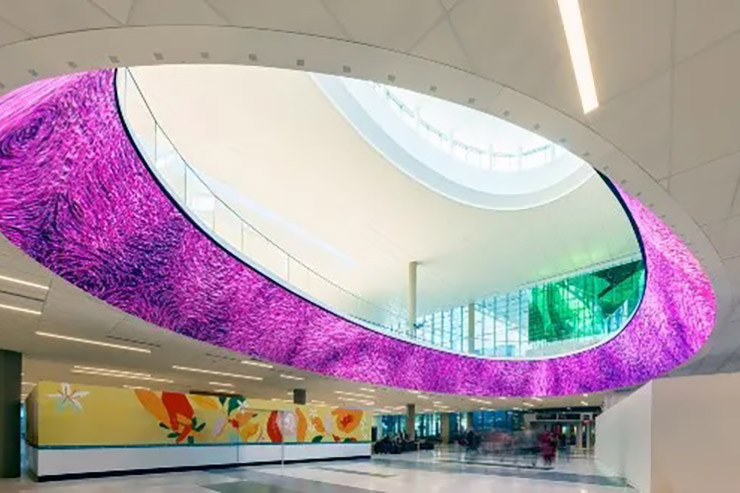
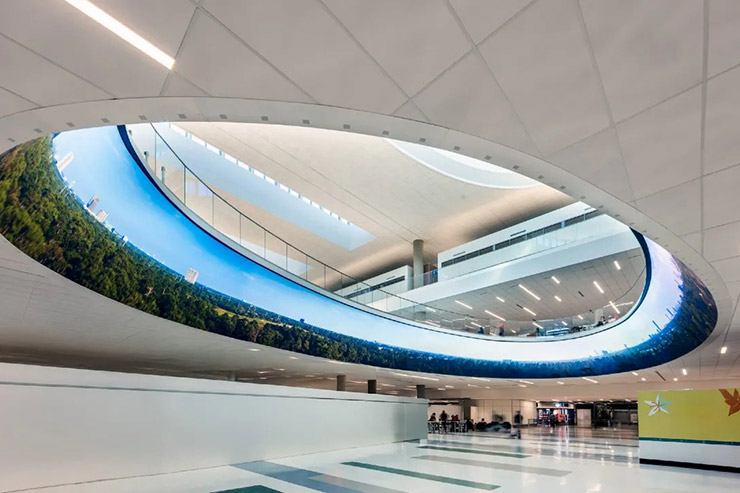
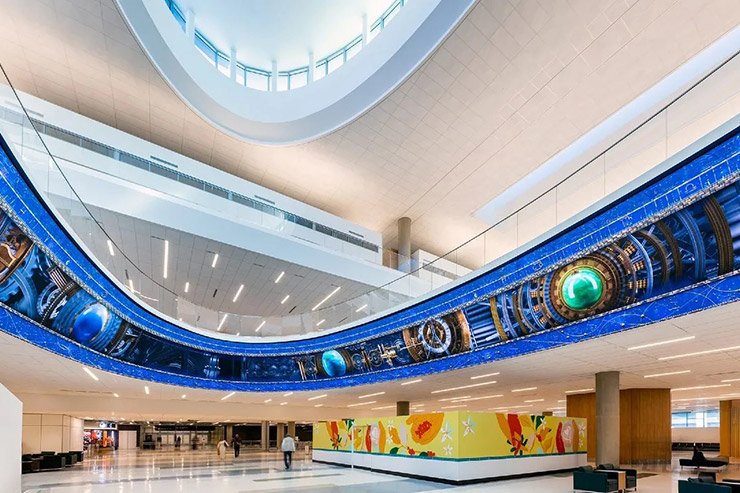
George Bush Intercontinental Airport in Houston has unveiled the Oculus, a 69-metre elliptical LED installation suspended between terminal levels. Integrated by Ford AV, it uses over 2,000 Nanolumens modules to form a seamless curved canvas of nearly 49 million pixels. Powered by PIXERA media servers, the system delivers motion-responsive visuals that react to passenger movement below. Serving as both an architectural landmark and storytelling platform, the Oculus creates a striking digital gateway that celebrates Houston’s identity for millions of travellers each year.

Ford AV served as system integrator for the Oculus installation at George Bush Intercontinental Airport, working alongside display manufacturer Nanolumens and immersive experience studio Gentilhomme to realise the ambitious architectural media feature.

The concept called for a suspended LED structure that would function simultaneously as a sculptural architectural element and a dynamic storytelling platform within one of the airport’s busiest passenger concourses. The installation needed to be visible from both the arrivals and departures levels while maintaining image continuity across a complex curved surface.

Unlike conventional LED video walls constructed from flat rectangular cabinets, the Oculus structure forms a truncated elliptical cone composed of continuous arcs. Achieving this geometry required the development of more than 2,000 custom Nanolumens Nixel Series LED modules, each engineered with precise trapezoidal shapes to maintain the installation’s smooth elliptical curvature.

Ford AV coordinated the integration of the LED system, content playback infrastructure and control platforms. PIXERA media servers power the playback environment, delivering the high-resolution media content that drives the nearly 49-million-pixel display. The servers interface with Smart Monkeys’ ISAAC control platform and Nanolumens’ NanoSuite display management system to provide centralised monitoring, scheduling and system diagnostics.

Occupancy sensors installed beneath the structure capture passenger movement and feed real-time data into the media system. PIXERA processes this information to dynamically adapt the visual content displayed across the curved LED surface, creating an interactive environment that responds organically to activity within the terminal.

The Oculus project presented several significant technical and architectural challenges.

The most notable was the complexity of the structure itself. Unlike standard LED installations built from uniform rectangular cabinets, the Oculus required a precisely engineered curved surface forming a truncated elliptical cone. Every module had to be custom designed and aligned within millimetre tolerances to maintain a continuous visual surface across the entire 69-metre structure.

To achieve this geometry, Nanolumens developed nine unique LED frame shapes and fabricated dozens of custom frames to construct the eight arc sections that form the display. This level of bespoke engineering required extensive factory testing and validation before installation could begin.

Another challenge was ensuring long-term reliability within a busy international airport environment. The installation operates in a bright, high-traffic terminal where visibility, durability and maintainability are critical. The LED system was therefore designed with front-service access, allowing individual panels to be replaced without disrupting adjacent sections.

Finally, the system needed to support interactive content while maintaining continuous operation. PIXERA media servers play a crucial role in managing the display’s high-resolution content and responding to real-time passenger movement data, ensuring smooth, responsive visuals across the nearly 49-million-pixel display.

The Oculus installation at George Bush Intercontinental Airport represents a landmark achievement in architectural digital media.

Spanning 69 metres and delivering nearly 49 million pixels of resolution, the installation transforms a major airport concourse into an immersive visual environment that welcomes and engages travellers from around the world. Suspended at a dramatic angle between two terminal levels, the LED structure functions as both a sculptural architectural centrepiece and a dynamic storytelling platform.

Beyond its striking visual impact, the project demonstrates exceptional engineering and integration expertise. The complex elliptical geometry required thousands of custom LED modules and meticulous pixel alignment to maintain seamless image continuity across the curved surface.

PIXERA media servers power the installation’s interactive media platform, enabling responsive content that adapts to passenger movement in real time while delivering reliable performance in a demanding transportation environment.

By blending architecture, engineering and immersive media technology, the Oculus creates a powerful sense of place for visitors arriving in Houston, transforming a transit space into an engaging digital landmark that reflects the city’s identity and spirit of innovation.