
Akershus Fortress


ProjectAkershus FortressLocationOslo, NorwayLighting DesignerZenisk, Project Manager Stian LindquisSystems IntegratorLYSKONTROLL ASSubmitted ByPharos Architectural Controls

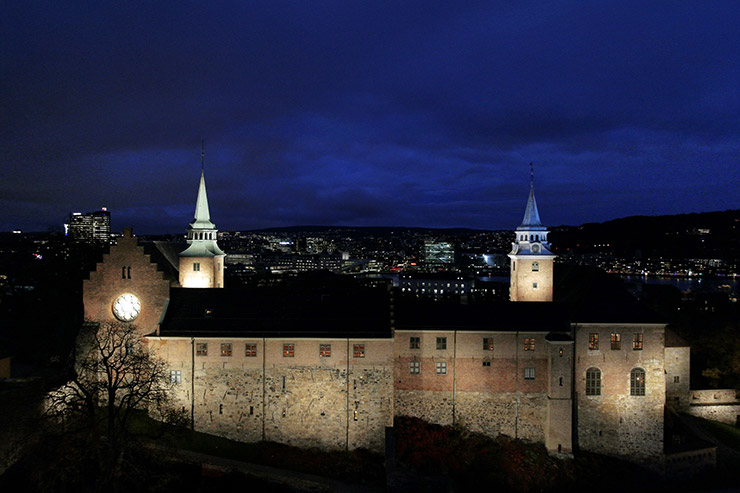
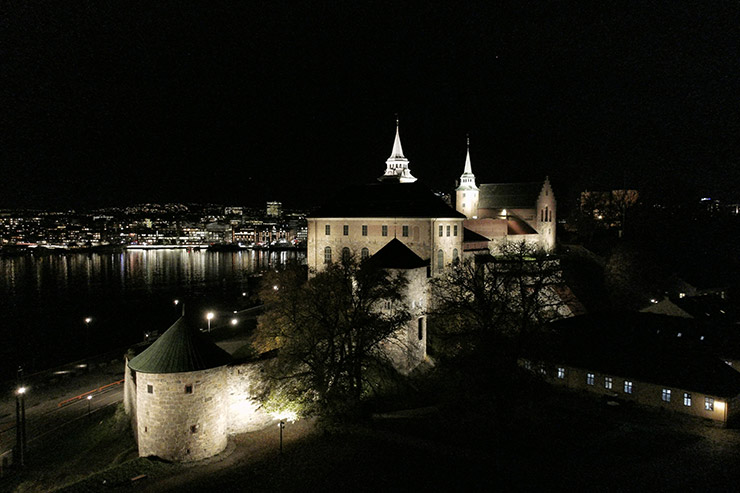
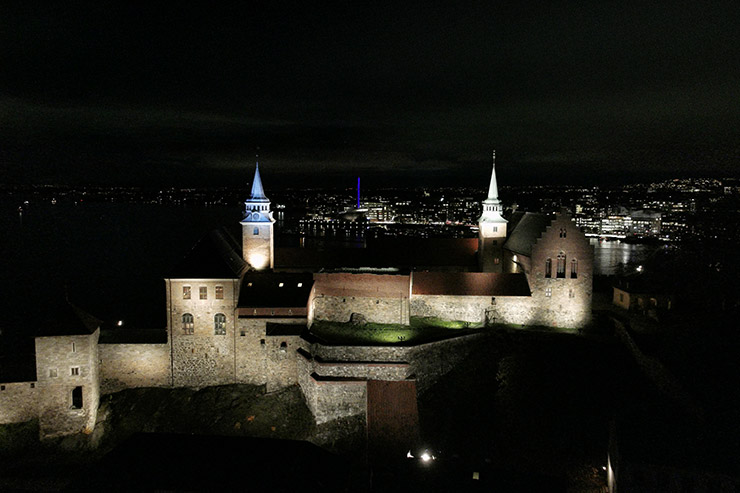
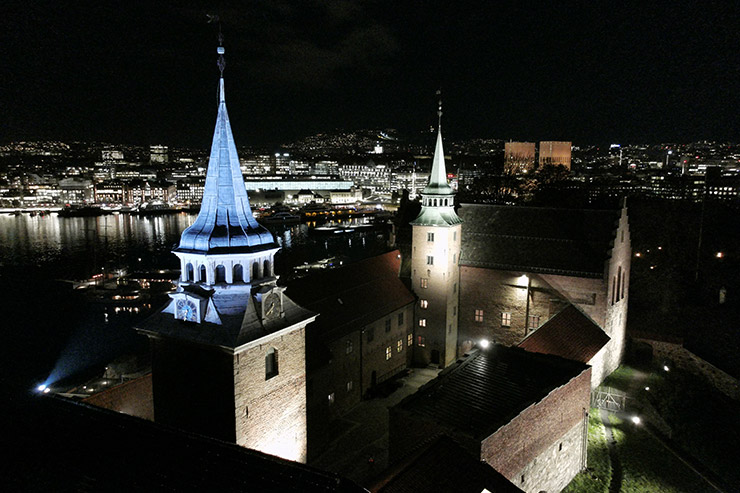
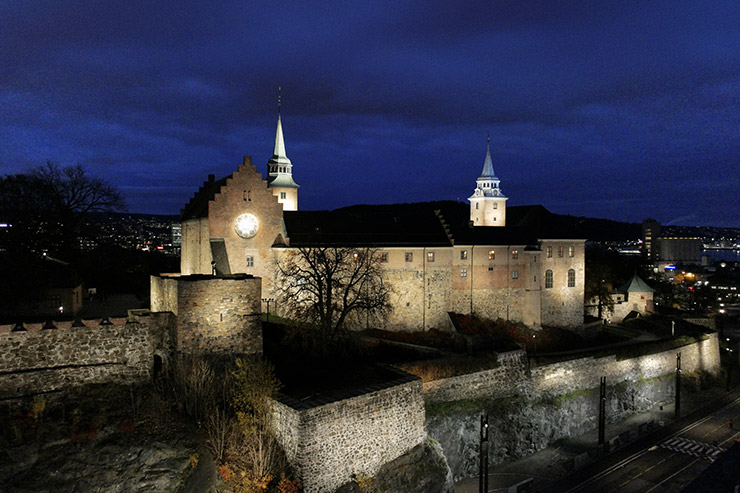
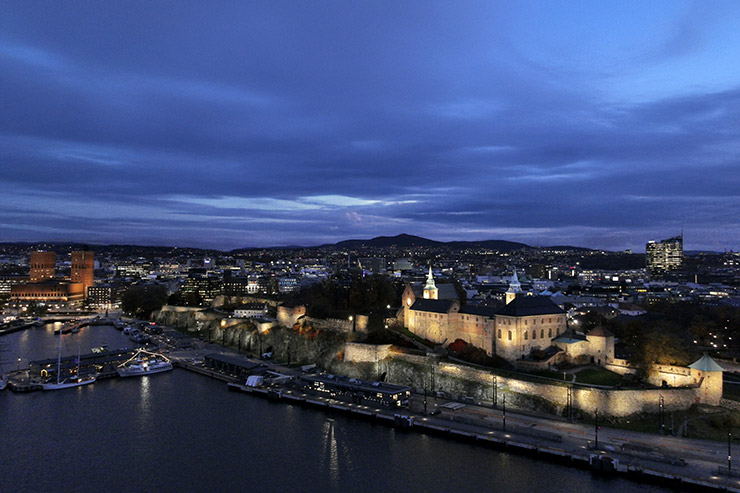
Dating back to the 13th century, Akershus Fortress is a landmark in the centre of Oslo, Norway. Popular with residents and visitors, the space is illuminated during the hours of darkness, but the lighting system had become outdated and inefficient.

The project required overhauling the exterior lighting system to enhance visibility, safety, and aesthetic presence, while improving sustainability and reducing environmental impact. Impact on the historic castle had to be minimal, with the lighting complementing the heritage and architecture of the national landmark.

The lighting project covered a large area across the fortress, which presented significant logistical and technical challenges. It was vital for the lighting system to be installed sympathetically, with minimal impact on the historical site. As it was not possible to install conventional cabling across the site, the entire control system, including all communication between controllers and luminaires, was designed to operate completely wirelessly.

To deliver distributed DALI control access across the fortress, the system incorporates multiple Pharos Designer RIO D4 devices which simplifies installation and gives precise local control across various locations. With the DALI subnets using LumenRadio W-DALI for wireless operation, the system is afforded robust and reliable performance while having minimal physical impact on the historic structures. Wireless network also provides futureproofing to the system, allowing long-term scalability.

The visuals of the lighting design were formulated in collaboration with cultural heritage and conservation authorities to ensure the installation enhanced the castle, complementing the historic architecture in a precise and balanced manner.

Akershus Fortress required an overhauled lighting installation that combined dynamic lighting which complemented the heritage of the structure and provided an enhanced experience for visitors.

Programming and remote control was a key consideration in order to achieve dynamic lighting scenes. Two Pharos Designer LPC controllers make up the main control engines of the installation. This dual-LPC setup provides both redundancy and distributed processing power, ensuring reliable operation across the extensive lighting layout. Alongside the Designer RIO D4 devices, the lighting installation provides expansive capabilities for dynamic lighting incorporating architectural scenes, triggers and logic sequences.

Incorporating Pharos Cloud adds another essential layer of capability, providing secure remote access for monitoring, management, and troubleshooting. With custom interfaces, local control is also afforded, allowing lighting scenes to be easily adjusted, providing flexibility for both day-to-day use and special events.

Together, the LPCs, RIO D4s, and Cloud platform create a flexible system operating over 232 luminaires installed across more that 50 positions. Sophisticated architectural and ceremonial illumination is enabled, delivering a visually unified, low-latency, and future-ready lighting experience. The Akershus Fortress project demonstrates how modern technology can work in harmony with history to elevate its presence for today’s generations.