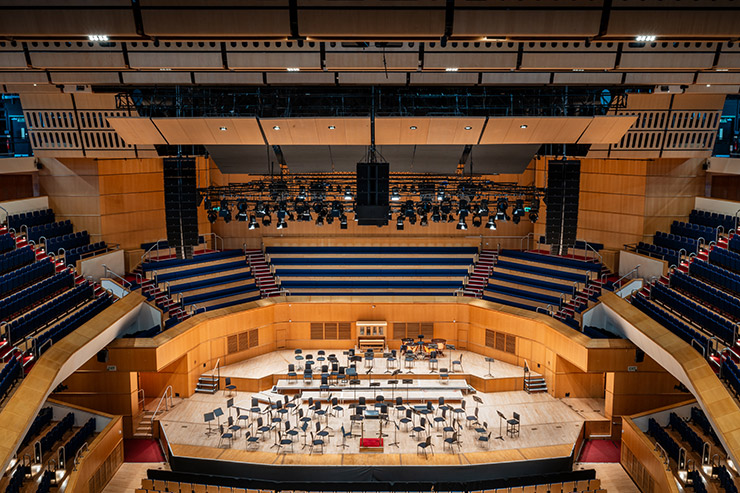

Glasgow Royal Concert Hall


ProjectGlasgow Royal Concert HallLocationGlasgow, ScotlandInstallerAdlibSubmitted ByAdlib

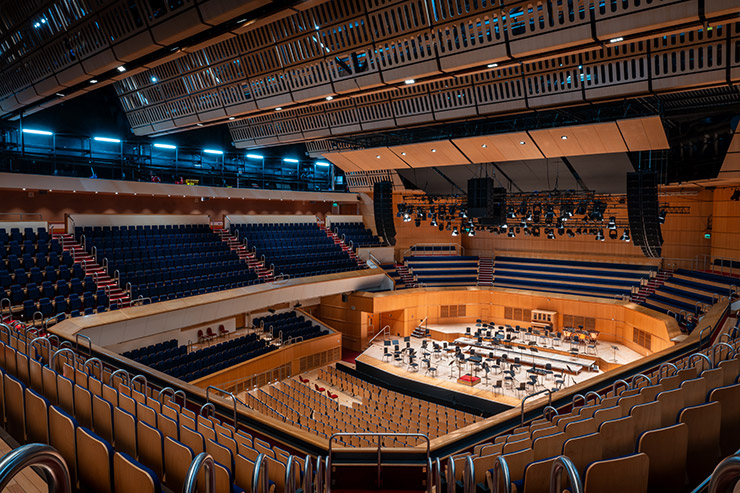
Glasgow Royal Concert Hall engaged Adlib to design and install a permanent, large-format PA system in its Main Auditorium, a flagship venue hosting 200 events per year, from orchestral performances to rock and pop. The client brief was clear: deliver consistent, high-quality audio to every seat in the house, across all genres, without compromising architectural sightlines.

Previously reliant on productions bringing their own equipment, the venue needed a solution that met touring artists’ and engineers’ expectations while reflecting the space’s prestige. The project was built on the success of a rental system Adlib deployed for the Celtic Connections festival.

Adlib’s process began long before installation, rooted in a festival-driven proof of concept. For the 2023 Celtic Connections festival, Adlib deployed a large-format L-Acoustics rental system in the Main Auditorium for the first time. Using L-Acoustics Soundvision software, System Technician Andy Russell created a detailed 3D model of the auditorium and designed a system that would deliver excellent coverage while keeping audience sightlines completely unaffected.

The festival’s extraordinarily broad programme, spanning intimate folk performances, world music, American blues, full orchestral collaborations, and high-energy rock shows, often on consecutive nights, provided an ideal real-world test environment. The overwhelmingly positive response from venue management, festival teams, touring engineers and audiences gave both Adlib and Glasgow Life the confidence to commission a permanent solution.

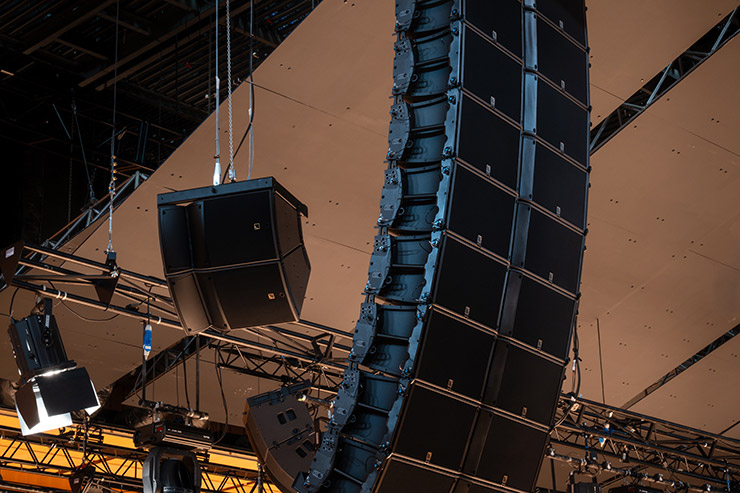
For the permanent installation, Adlib’s Billy Bryson worked alongside Russell in the design phase, using Soundvision to model and refine every element of the system. A flown subwoofer configuration was modelled to provide rear rejection focused toward the stage while retaining uniform low-frequency coverage across the audience area.

Integration between the main system and an extensive network of fill loudspeakers was also refined in simulation, maximising the quality of on-site calibration time and ensuring venue technicians were fully involved throughout commissioning.

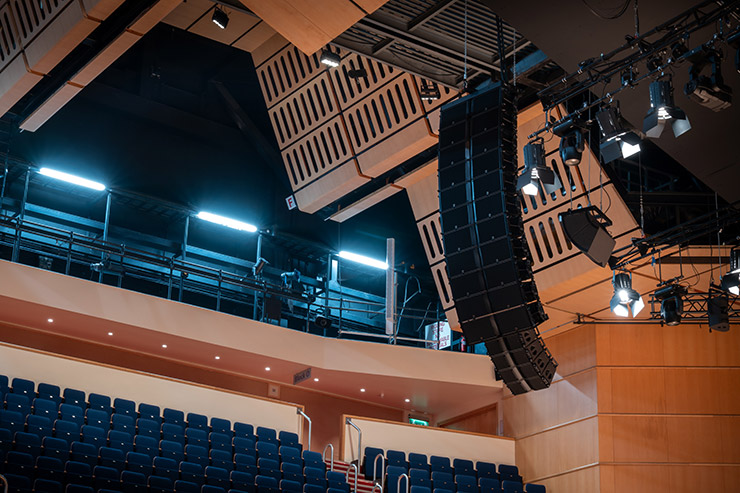
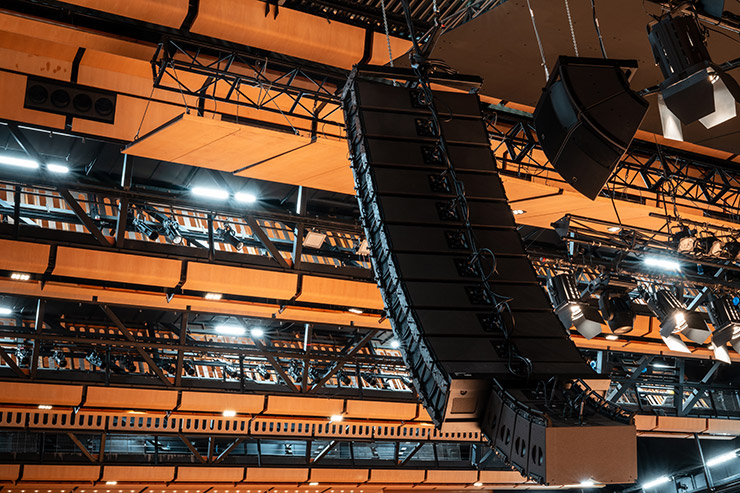
The installed system is built around an L-Acoustics K-Series platform. Main hangs comprise L-Acoustics K2 with KARA down-fills and KS28 subwoofers, with X12 and A15 loudspeakers providing out-fill and choir-stall coverage. On stage, X8 loudspeakers line the downstage edge, supported by stacked KS21 subwoofers and A15 in-fills.

Critically, under-balcony coverage is delivered via 5XT loudspeakers, ensuring no audience member is underserved. The system is driven by LA12X and LA4X amplified controllers, with two P1 processors at the front-end and signal distribution handled via an AVB Milan network with full redundancy.

The results are transformative. Every seat in the 200-event-per-year auditorium now receives consistent tonal balance, clarity and impact regardless of genre or production scale. The venue can confidently attract world-class artists, meeting the technical expectations of touring productions while delivering an exceptional experience to every audience member.

The principal challenge of this project was one that many heritage concert hall installations face: delivering a large-format, modern PA system capable of performing at the highest professional level without visually dominating or compromising the architectural integrity of the space. Glasgow Royal Concert Hall is a prestigious venue where sightlines and aesthetics are as important as acoustics. Any system that intruded on the audience’s visual experience or felt out of place in the environment would have been unacceptable, regardless of its sonic performance.

Adlib addressed this through meticulous system design and detailed pre-visualisation using L-Acoustics Soundvision software. By building a precise 3D model of the auditorium, the team could test and refine speaker placement, angles, and coverage patterns virtually before a single piece of equipment was flown.

This allowed the design to be optimised so that the main K2 hangs deliver broad, even coverage while discrete delay and fill loudspeakers, including under-balcony 5XT deployments, were integrated into the fabric of the auditorium in a way that is unobtrusive to audiences.

As Glasgow Life’s Technical Manager, Douglas Steel, noted, the delays are built into the space in such a way that audiences do not necessarily notice them, yet every seat benefits from their contribution.

A further challenge was ensuring the system could serve the full breadth of programming the venue hosts, over 200 events per year, spanning orchestral concerts, folk, rock, pop and everything in between. A system optimised for one genre at the expense of another would not meet the venue’s needs.

The rental deployment at Celtic Connections 2023 was instrumental in proving the system’s versatility across wildly different production styles on consecutive nights, providing real-world validation before the permanent solution was commissioned.

Finally, the commissioning process itself required close collaboration between Adlib’s engineers and the venue’s own technical team, ensuring house technicians were fully embedded in the calibration process. This investment in knowledge transfer means the venue can now confidently present a world-class, flexible system to visiting productions, reducing reliance on touring equipment and raising the baseline quality of every event.

The Glasgow Royal Concert Hall project is one that reflects what genuine long-term collaboration and careful technical thinking can produce when both are given the space to develop properly.

The approach taken was deliberate. Rather than moving straight to a permanent specification, the team first proved the concept in a live environment. The Celtic Connections rental deployment gave the venue, festival teams, touring engineers and audiences the opportunity to experience a modern concert-grade system in the auditorium before any long-term commitment was made. The permanent installation benefited directly from everything learned during that festival run, producing a more considered and thoroughly validated outcome as a result.

The technical process was rigorous throughout. Detailed simulation in L-Acoustics Soundvision allowed the system design to be refined before installation began, reducing on-site variables and maximising the quality of calibration. The close involvement of venue technicians during commissioning ensured the Concert Hall team developed the knowledge and confidence to present the system effectively to every visiting production.

Fundamentally, the project solved a genuine operational problem. With over 200 events annually spanning an exceptionally broad range of genres, the venue had previously been dependent on visiting productions supplying their own equipment, with no guarantee of a consistent audience experience. The permanent installation changes that entirely. Every seat now benefits from the same high-quality audio, regardless of what is on stage or who is touring.

Achieving that within a heritage concert hall environment, where architectural sightlines and aesthetics carry real weight, required careful design and precise execution. The fact that the system integrates discreetly into the fabric of the auditorium, while performing at full concert-grade level, reflects the care taken at every stage of the process.

The response from venue staff, visiting engineers and audiences since the system went live has been extremely positive. That reception, more than anything else, speaks to what the project set out to achieve and what it has delivered.