

Phoenix Riders Equestrian Centre


ProjectPhoenix Riders Equestrian CentreLocationPloiești, RomaniaManufacturersPowersoftInstallerAudiovisionSubmitted ByPowersoft

Phoenix Riders, a leading equestrian venue in Eastern Europe, has deployed a scalable multi-zone audio system to support competitions, hospitality and training areas.

Integrated by Audiovision, the installation spans a 20,000m² complex using networked audio-over-IP and distributed amplifier hubs based on Powersoft’s Mezzo, Unica and Quattrocanali platforms.

The system delivers powerful event reinforcement alongside refined background audio in VIP and leisure spaces. Designed for expansion to 150,000m², it provides a future-ready audio infrastructure for large-scale sports environments.

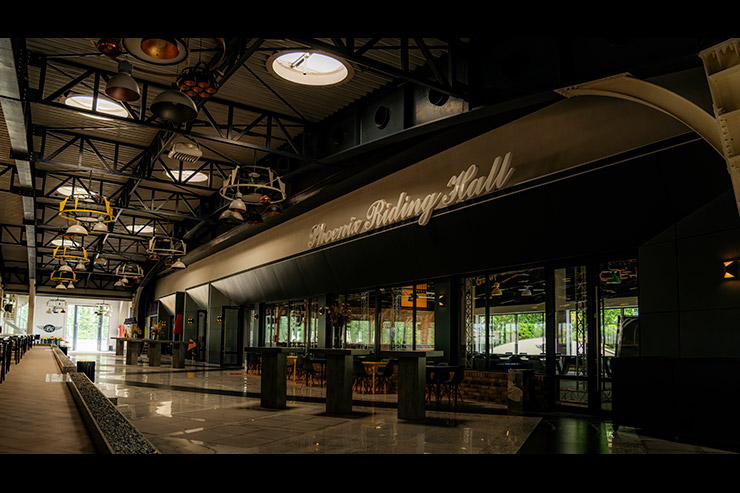
Phoenix Riders was designed as a world-class equestrian sports complex, hosting international competitions while also providing hospitality areas, training facilities and leisure spaces for visitors.

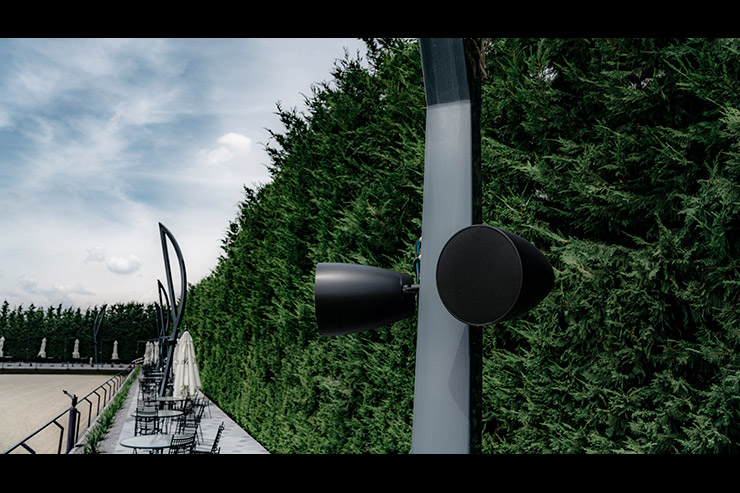
From the outset, the venue required an audio system capable of delivering clear announcements and powerful sound reinforcement across a large outdoor arena, while also supporting background music and paging throughout restaurants, cafés and administrative spaces.

System integrator Audiovision was responsible for designing and implementing a complete audio infrastructure that could deliver consistent performance across the site’s 20,000m² operational footprint.

To achieve this, the integrator implemented a networked audio-over-IP system based on Dante, enabling flexible routing of audio sources, low-latency signal distribution and centralised control across the venue.

The audio architecture is organised into five dedicated amplifier hubs, each serving key functional areas of the facility including the main arena, hospitality zones and warm-up areas.

These hubs distribute amplification across multiple loudspeaker zones using a combination of Powersoft Mezzo, Unica and Quattrocanali amplifier platforms, allowing operators to deliver powerful sound reinforcement during competitions while maintaining more subtle audio environments in leisure spaces.

The system also incorporates Powersoft’s Dynamic Music Distribution (DMD) functionality, enabling audio sources to be shared or independently routed between zones without requiring complex external processing.

Control interfaces including the Powersoft WM Touch panel allow venue operators to manage volume levels and zone routing through an intuitive user interface, simplifying day-to-day operation during events.

Through this distributed architecture, Audiovision delivered a flexible audio infrastructure capable of supporting the venue’s current operations while also accommodating future expansion.

The primary challenge was designing an audio system capable of delivering consistent coverage across a large, multifunctional sports venue.

Phoenix Riders hosts international equestrian competitions alongside hospitality events and training activities, each requiring different audio performance levels and operational workflows.

The installation therefore needed to support multiple simultaneous audio environments, from powerful sound reinforcement in the competition arena to background music in restaurants and lounges.
Another key challenge was ensuring the system would remain scalable as the venue expands.

The Phoenix Riders development is expected to grow from its current 20,000m² footprint to a planned 150,000m² complex, including additional arenas, grandstands and hospitality areas.

To accommodate this future growth, the system architecture was designed with distributed amplifier hubs and network-based routing that can be expanded without major infrastructure changes.

Finally, the system needed to deliver reliable operation during high-profile sporting events, where announcements, music playback and event coordination must function flawlessly for both athletes and spectators.

At Phoenix Riders, audio is treated not as an add-on, but as core infrastructure underpinning the entire venue operation. Spanning a vast equestrian complex, the system delivers clarity and control across arenas, hospitality areas and circulation spaces alike.

Its strength lies in a highly adaptable, networked architecture, enabling operators to manage routing and zoning with minimal external hardware. This approach not only streamlines system design but ensures long-term efficiency in day-to-day use.

Perhaps most notably, the installation has been engineered with expansion in mind. As the venue scales from 20,000m² to a projected 150,000m², the system is ready to evolve alongside it, a forward-thinking approach that sets a strong precedent for large-scale sports environments.