
Avicii Arena


ProjectAvicii ArenaLocationStockholm, SwedenArchitectC.F. MøllerAcousticianEfterklangSystems IntegratorStouenborg ApSSubmitted ByStouenborg ApS

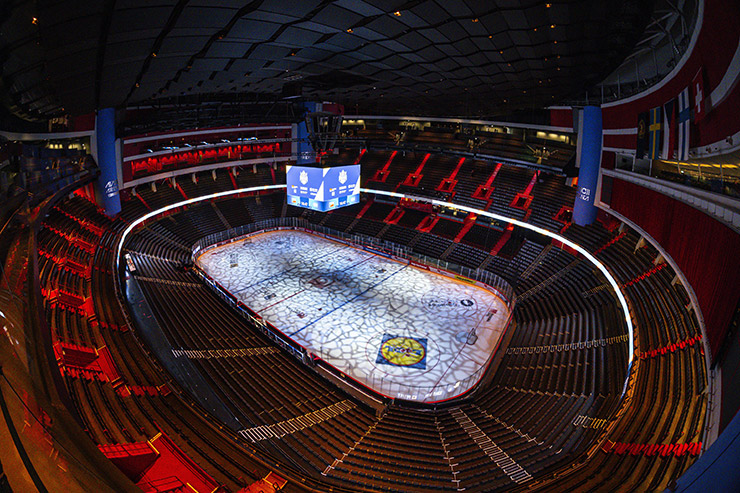
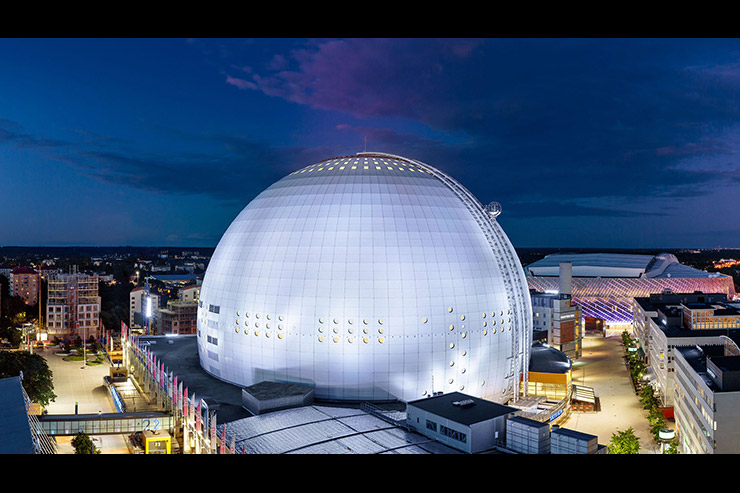
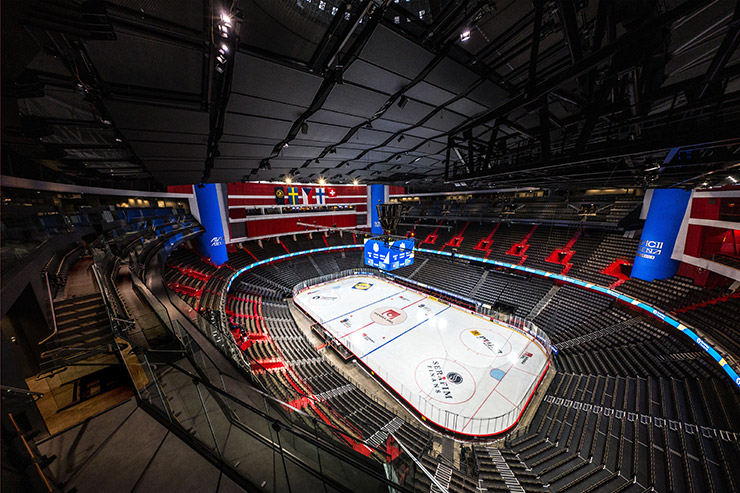
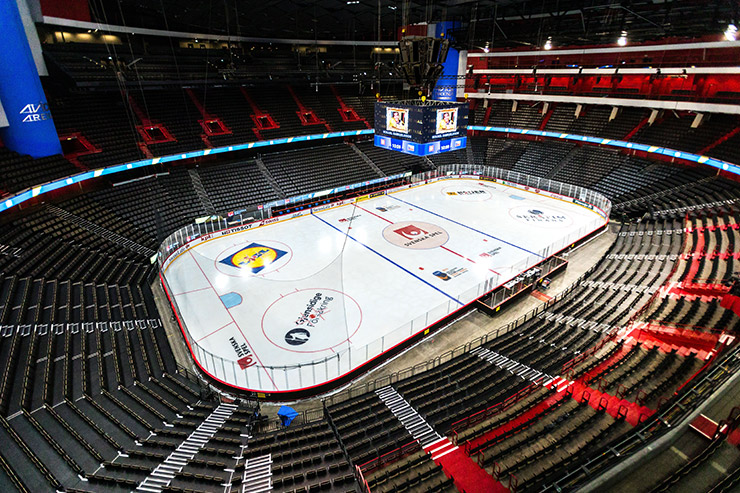
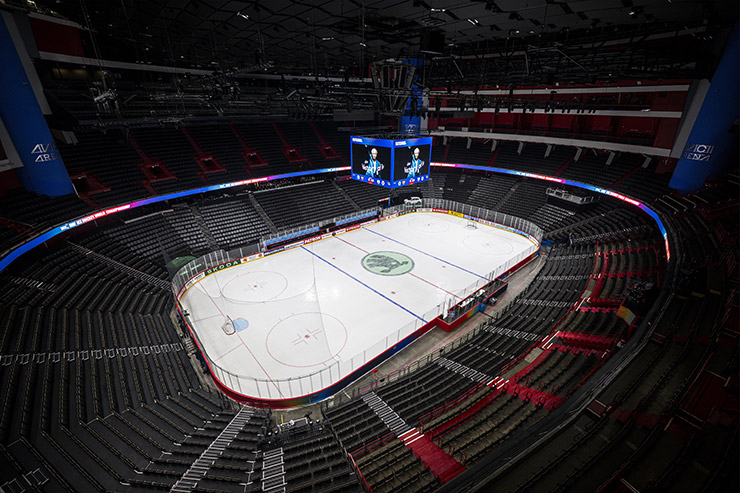
SGAF, owner of Avicii Arena, tasked Stouenborg with transforming Europe’s largest spherical arena into a venue that could feel as intimate and unified as Stockholm’s smaller ice hockey stadiums. The brief was to create a groundbreaking sound and acoustic solution that could connect the entire 600,000 m³ space, enabling chants and music to be experienced instantly across the arena.

At the same time, the solution had to preserve the building’s cultural heritage, meet logistical constraints, and be delivered on a tight deadline ahead of the Ice Hockey World Championship—while remaining flexible for sports, concerts, and international TV production.

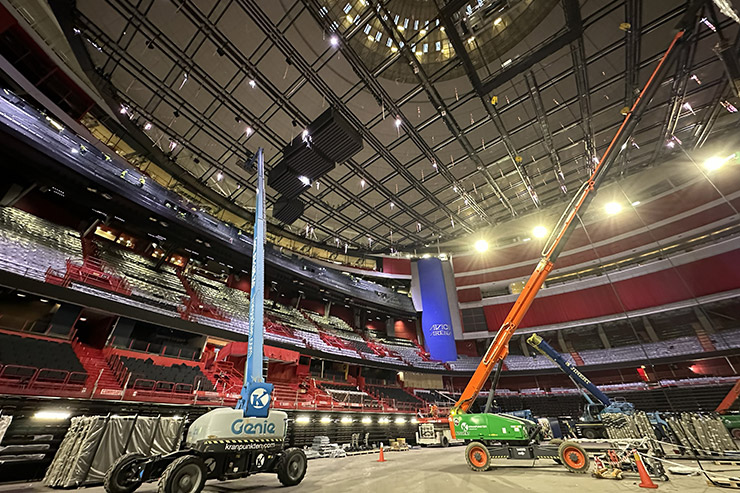
The installer’s process was designed for maximum precision, speed, and reliability in one of Europe’s most complex acoustic environments. Because all equipment was mounted 35 meters above the floor inside a spherical dome, there was virtually no opportunity for adjustment after rigging. To eliminate risk, Stouenborg pre-assembled, tested, and labeled every loudspeaker, bracket, and cable in Copenhagen before shipment.

Advanced 3D modeling in REVIT was used to simulate placement, angles, and tolerances, ensuring millimeter accuracy and reducing on-site uncertainty. Installation was executed with aviation-inspired checklists and strict Swedish safety procedures, enabling completion in just eight days with zero errors and zero accidents. For operational security, the team also chose an analog XLR-based infrastructure to avoid potential failures in digital network components located high above the arena floor.

Within the venue, audio technology is used not only to deliver sound, but to create presence and community at scale. The core solution combines the world’s largest Meyer Sound Constellation system—84 loudspeakers and 72 microphones—with the arena’s foldable acoustic ceiling, which functions as both a tuned acoustic surface and a heavy-duty rigging structure (up to 300 tons).

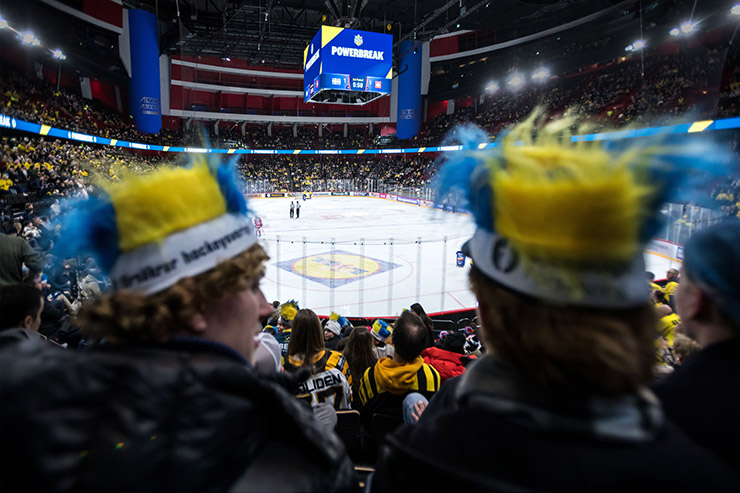
The microphones capture audience reaction and in-room energy, while the Constellation system redistributes it in real time so cheers, chants, and atmosphere are instantly shared across the entire 600,000 m³ space. Integrated with Spacemap Go, the system also enables immersive sound movement and multiple presets, allowing the arena’s audio profile to shift seamlessly between sports, concerts, and broadcast productions.

The result is a transformed arena that delivers clarity, intimacy, and power despite its enormous volume. Reverberation is controlled, speech and music intelligibility are dramatically improved, and the audience becomes an active part of the experience—turning Avicii Arena from an acoustic challenge into an international benchmark for large-scale immersive audio.

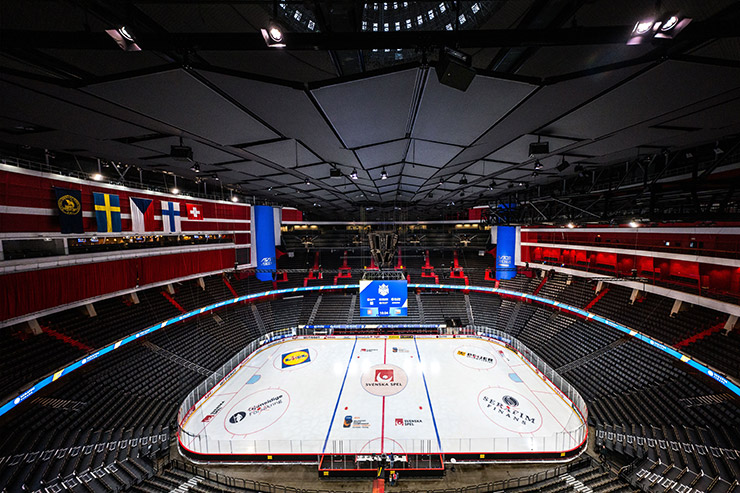
This project also stands out because it combines world-first audio innovation with structural engineering, sustainability, and long-term operational support—making it far more than a one-time installation. The arena’s foldable acoustic ceiling is not only an acoustic solution but a major architectural and logistical upgrade: a dual-purpose structure built from approximately 40 tons of panels that both improves reverberation control and provides a rigging capacity of up to 300 tons.

This single element changes how the arena can be programmed, enabling faster changeovers and supporting complex scenography and broadcast requirements without compromising safety or heritage value.

The project’s delivery method is equally exceptional. A venue of this scale normally requires months of installation time, but Avicii Arena had to be ready for the Ice Hockey World Championship. The team overcame this by shifting complexity away from the site: prefabrication, documentation, and quality control were done in advance, and on-site work followed tightly choreographed procedures inspired by aviation and industrial safety culture. The result was not only speed, but certainty—zero errors, zero accidents, and a system installed with confidence in an environment where mistakes would have been extremely costly.

Sustainability was embedded into both design and execution. The system uses energy-efficient loudspeakers that consume roughly half the power of traditional models and are built for a 25–30 year lifespan, reducing future replacements, waste, and maintenance.

Extensive pre-production and optimised transport reduced on-site waste and shortened installation time, lowering the project’s overall footprint. The project also aligns with responsible industry practices through technology choices connected to initiatives like GreenAV.

Finally, the value of the project continues well beyond handover. Stouenborg remains involved through ongoing testing, fine-tuning, firmware updates, remote monitoring, and operator training—ensuring the system performs flawlessly year after year and empowering the venue team to unlock its full potential. In short, Avicii Arena is not just an upgraded building; it is a future-proof experience platform where technology, sustainability, and operational excellence converge.

The installation faced four main challenges: extreme scale, precision requirements, time pressure, and operational reliability. Avicii Arena’s vast spherical volume (85 m high, 110 m diameter, 600,000 m³) created major acoustic complexity and made it difficult to achieve an intimate, connected audience experience. The dome geometry and the new foldable acoustic ceiling structure also turned loudspeaker and microphone placement into a high-risk puzzle – 84 loudspeakers and 72 microphones had to be aligned with millimeter precision 35 meters above the floor, with virtually no opportunity for adjustments after mounting.

The timeline was another critical obstacle. A project that normally would take months had to be executed within a short window to meet the Ice Hockey World Championship deadline, and all work had to comply with strict Swedish safety regulations. This was overcome through meticulous pre-production, extensive prefabrication in Copenhagen, and detailed step-by-step procedures and checklists inspired by the aviation industry. Advanced 3D modeling in REVIT was used to simulate placement, angles, and tolerances before arriving on site, minimizing risk and saving time during installation.

Finally, system reliability was essential. A failure in digital network components mounted high above the arena floor could disable the full system. The team mitigated this risk by choosing a robust analog XLR-based infrastructure, ensuring faster installation and maximum operational stability. Combined with strict safety processes and close collaboration between Stouenborg, Meyer Sound, NCC, and acousticians, the full installation was completed in just eight days with zero errors and zero accidents.

This project redefines what is technically and emotionally possible in large-scale arena sound. Avicii Arena is one of the most acoustically challenging venues in Northern Europe: a 600,000 m³ spherical volume where intimacy, clarity, and audience connection had historically been impossible to achieve. Stouenborg and partners didn’t just improve the sound — they solved the core problem of scale by creating a world-first electroacoustic concept that makes 14,000 people feel present with each other, and makes players and performers feel the audience instantly across the entire space.

The solution is exceptional in both innovation and integration. The project combines the world’s largest Meyer Sound Constellation system with Spacemap Go and the arena’s groundbreaking foldable acoustic ceiling that doubles as a rigging structure supporting up to 300 tons. This ceiling is not a “feature” — it is a structural and acoustic breakthrough that turns the arena into a flexible, reconfigurable venue capable of switching between world-class sports, major concerts, and international TV productions without compromise.

Execution was equally award-worthy. 84 loudspeakers and 72 microphones were installed with millimeter precision 35 meters above the floor, in an arena defined by complex geometry and strict heritage requirements. Despite a timeline that would normally require months, the installation was delivered in just eight days through extensive prefabrication, REVIT-based 3D modeling, and safety procedures inspired by the aviation industry — achieving zero accidents and zero errors.

The impact is undeniable. Where Avicii Arena was once criticized for poor acoustics, it is now widely praised for sound clarity, intimacy, and power — enabling moments where even a whisper can carry emotional weight across thousands of people. This project is more than a technical upgrade: it is a new international benchmark for arena experience design, proving that technology can transform not only how an arena sounds, but how it feels.